
If you’ve ever wondered whether Japan and Canada qualify as high-income countries, the short answer is: yes, absolutely.
Both nations have held this status for decades and continue to rank among the world’s wealthiest economies.
But what does “high-income country” actually mean, how is it measured, and what makes Japan and Canada stand out? Let’s break it all down.
What Is a High-Income Country?
The term “high-income country” isn’t just a casual label — it’s an official classification assigned by the World Bank every year on July 1.
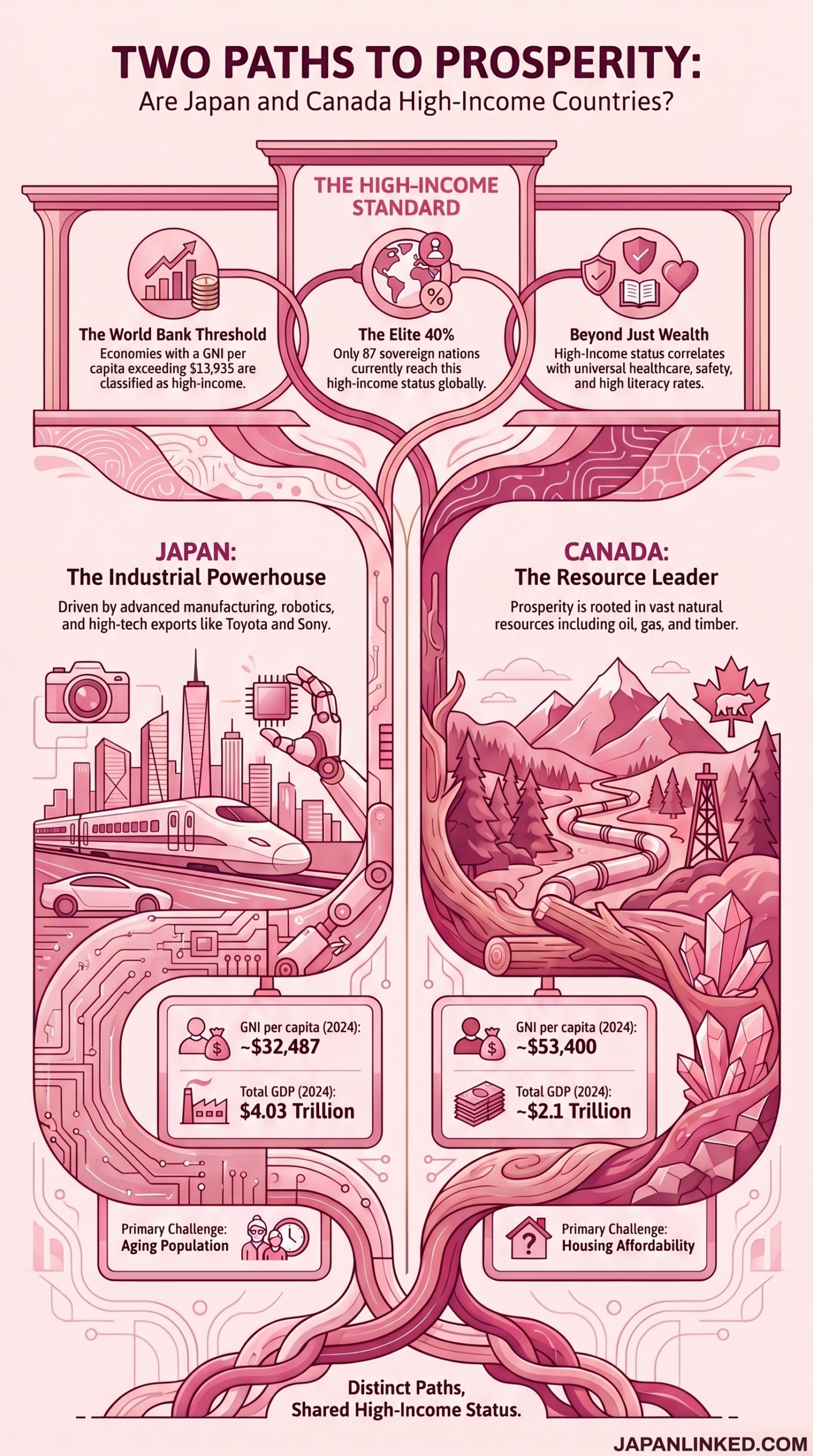
The World Bank divides the world’s economies into four income groups based on Gross National Income (GNI) per capita, calculated using the Atlas method:
- Low income: GNI per capita of $1,135 or less
- Lower-middle income: $1,136 – $4,495
- Upper-middle income: $4,496 – $13,935
- High income: More than $13,935
For the World Bank’s current 2026 fiscal year, high-income economies are those with a GNI per capita above $13,935 (based on 2024 data).
GNI per capita measures the average income earned by a country’s residents — including income from abroad — divided by the population. It’s one of the most widely used indicators of a nation’s economic strength and standard of living.
Also Read: Do Canadians Need Visa To Visit Japan & Japan Vs Canada: Where Is More Safe
Are Japan and Canada Officially High Income Countries?
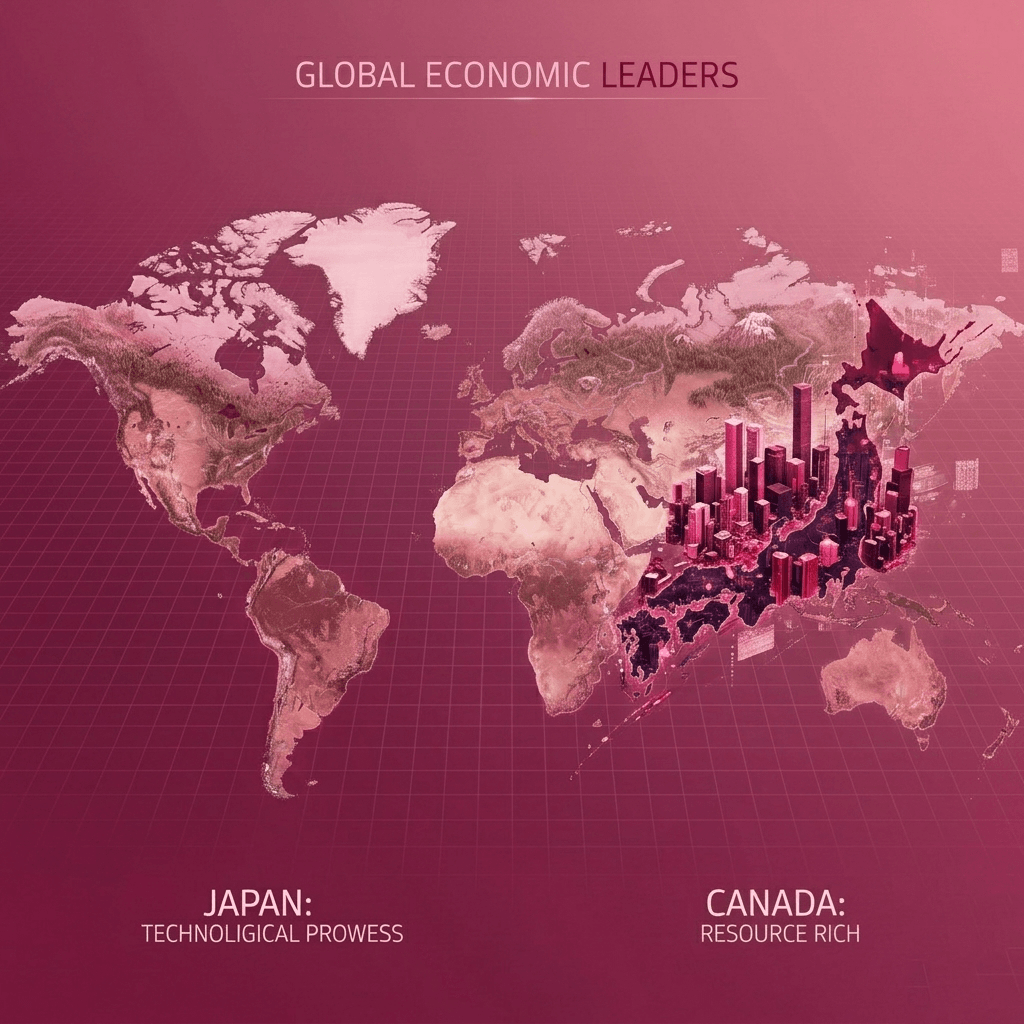
Yes — both Japan and Canada are officially classified as high-income countries by the World Bank, and have been for many years.
As of the 2025 classification, approximately 87 economies fall into the high-income category, including major industrialized nations such as the United States, Germany, and Japan.
Canada also appears in this same group. The World Bank’s official list of high-income economies explicitly includes Canada alongside nations like Australia, Austria, Belgium, and Brunei Darussalam.
In other words, both countries aren’t just technically high-income — they’re longstanding members of this elite economic group.
Japan as a High-Income Country

Japan is the third-largest economy in the world by nominal GDP and one of Asia’s most advanced industrialized nations.
Its high-income status is backed by decades of strong economic development, technological innovation, and export-driven growth.
Japan’s GNI Per Capita
Japan’s GDP per capita stood at approximately $32,487 in 2024 — well above the $13,935 high income threshold.
While this figure is lower than some other wealthy nations like the United States, it still places Japan firmly among the world’s top economies.
Why Japan Qualifies
Several key factors drive Japan’s high income status:
- Advanced manufacturing: Japan is a global leader in the automotive, electronics, and robotics industries.
- High-tech exports: Companies such as Toyota, Sony, and Panasonic generate substantial export revenue.
- Strong human capital: Japan boasts near-universal literacy and a highly skilled workforce.
- Robust infrastructure: From bullet trains to cutting-edge healthcare, Japan’s public systems are world-class.
- Full electrification: Electricity access stands at 100% of the population, reflecting the country’s highly developed infrastructure.
East Asia and the Pacific’s strong representation in the high-income category is largely thanks to powerhouses like Japan, South Korea, and Singapore.
Japan’s Economic Challenges
Despite its high-income status, Japan faces notable economic pressures. A rapidly aging population, deflation cycles, and sluggish GDP growth — just 0.1% annual GDP growth in 2024 — present ongoing challenges.
Still, these headwinds haven’t threatened Japan’s high-income classification, which remains secure.
Canada as a High-Income Country

Canada is one of the wealthiest nations in the world and a founding member of the G7 group of advanced economies. Its high income classification is well-deserved and deeply rooted in a diversified, resource-rich economy.
Canada’s GNI Per Capita
Canada’s GNI per capita (Atlas method) was reported at $53,400 USD in 2024 — more than three times the high-income threshold.
This places Canada among the top tier of high-income nations globally, outperforming many of its European counterparts.
Why Canada Qualifies
Canada’s high-income status is built on several pillars:
- Natural resources: Canada is one of the world’s top producers of oil, natural gas, timber, and minerals.
- Diversified economy: From financial services in Toronto to tech hubs in Vancouver and Waterloo, Canada’s economy spans many sectors.
- Strong trade relationships: Canada benefits from deep trade ties with the United States through agreements such as USMCA, as well as with the EU and Asian markets.
- Stable governance: Canada consistently ranks highly for rule of law, property rights, and institutional quality — all key drivers of long-term prosperity.
- High standard of living: Universal healthcare, strong public education, and a robust social safety net contribute to quality-of-life indicators well above global averages.
How Japan and Canada Compare Within the High-Income Group
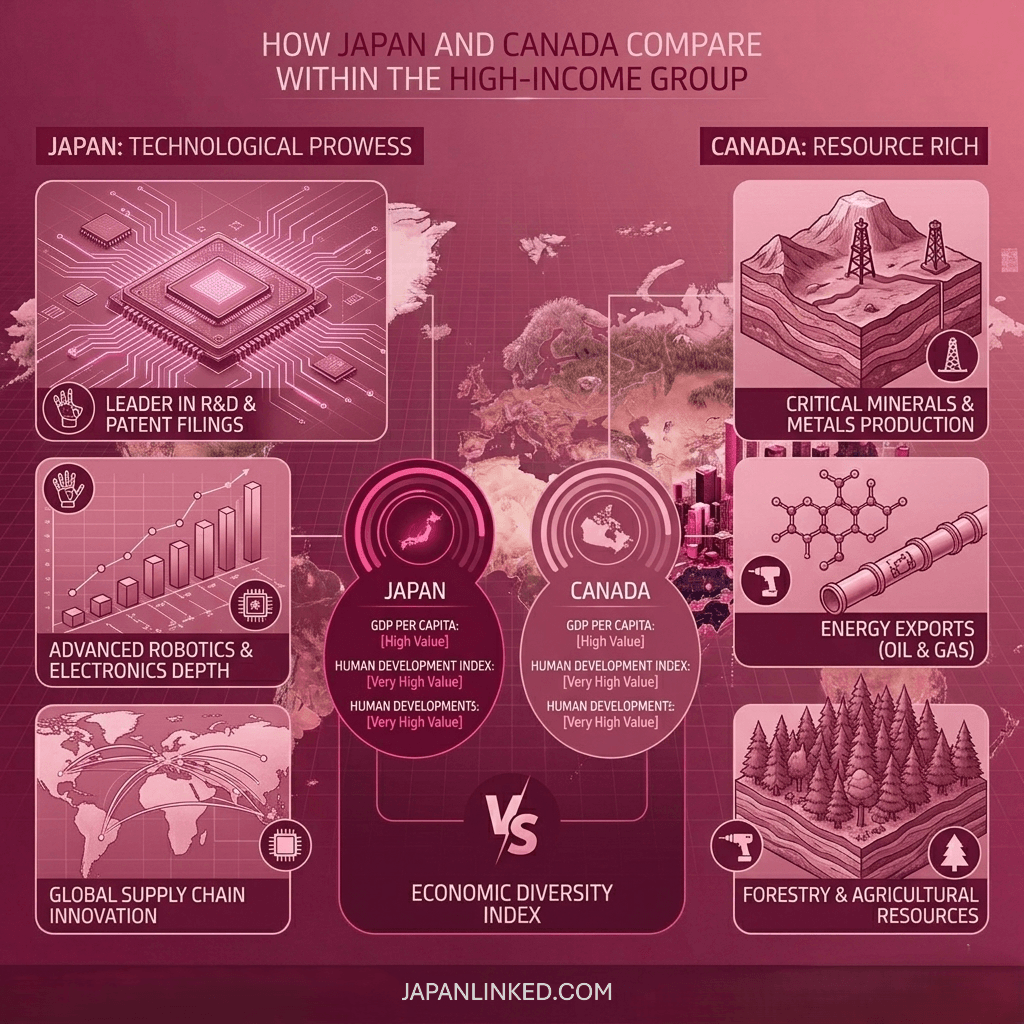
While both countries are firmly high-income, they differ in important ways within that category.
| Indicator | Japan | Canada |
|---|---|---|
| GNI per capita (2024) | ~$32,487 | ~$53,400 |
| GDP (2024) | $4.03 trillion | ~$2.1 trillion |
| Population | ~125 million | ~40 million |
| Economic strengths | Manufacturing, tech exports | Natural resources, services |
| Key challenge | Aging population | Housing affordability |
Canada’s GNI per capita is notably higher than Japan’s — largely because Japan’s large population (about 125 million people) dilutes its massive GDP across more residents.
The Global Picture: How Rare Is High Income Status?
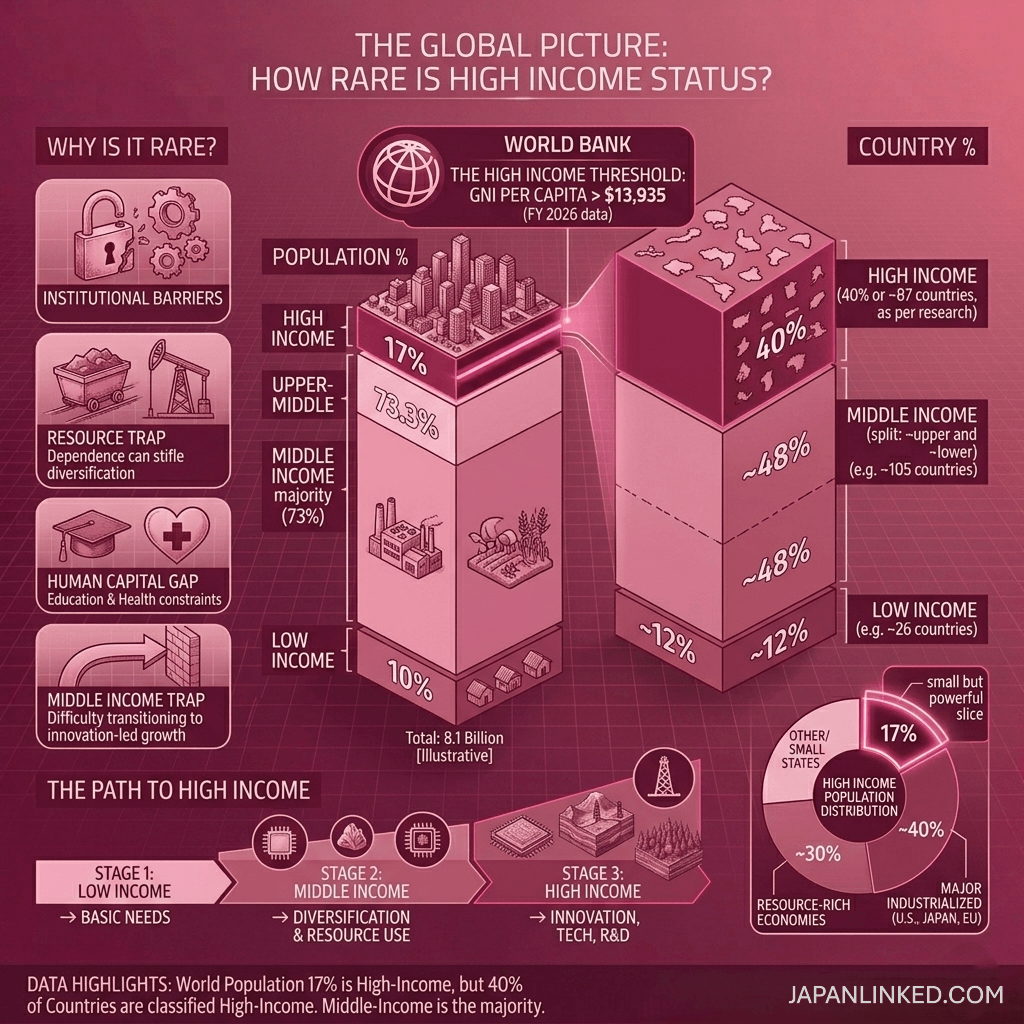
High income status is more common today than it used to be, but it’s still far from universal. In 1987, only about 25% of reporting countries were classified as high-income.
By 2023, that share had risen to 40%. That’s meaningful progress — but it also means the majority of the world’s nations still don’t qualify.
Today, 87 high-income sovereign countries are recognized by the World Bank, with Europe remaining the epicenter of affluence — more than two-thirds of European countries fall into the top income bracket.
Japan and Canada are part of a group that combines economic output, institutional strength, and human development in ways that lift per capita income well above the threshold.
Being a high-income country doesn’t mean every citizen is wealthy — income inequality exists in both Japan and Canada — but it does signal a level of national economic capacity that most countries have not yet reached.
Does High Income Mean High Quality of Life?
High income status is strongly correlated with quality of life, but the relationship isn’t perfect. Both Japan and Canada score well on broader measures of human development:
- Healthcare access: Both countries offer universal or near-universal healthcare systems.
- Education: Japan and Canada consistently rank among the top nations for educational attainment and literacy.
- Life expectancy: Japan, in particular, is famous for having one of the highest life expectancies in the world — a testament to its healthcare system and lifestyle culture.
- Safety and stability: Both nations rank highly on global peace and safety indices.
That said, challenges remain. Japan struggles with work-life balance, gender inequality in the workplace, and demographic decline.
Canada faces a severe housing crisis in its major cities and growing income inequality. Being “high income” at a national level doesn’t automatically translate to prosperity for every citizen — but the foundation is strong.
Conclusion
So, are Japan and Canada high-income countries? Unequivocally, yes. Both nations exceed the World Bank’s GNI per capita threshold by a wide margin and have maintained this status for decades.
Japan’s economic identity is built on manufacturing excellence and technological innovation, while Canada draws strength from its vast natural resources and diversified service economy.
Together, they represent two distinct pathways to high income status — proving that there’s no single formula for prosperity.
Whether you’re a student studying economics, a researcher comparing countries, or simply someone curious about where nations stand on the global wealth ladder, Japan and Canada are textbook examples of what sustained economic development can achieve.
