
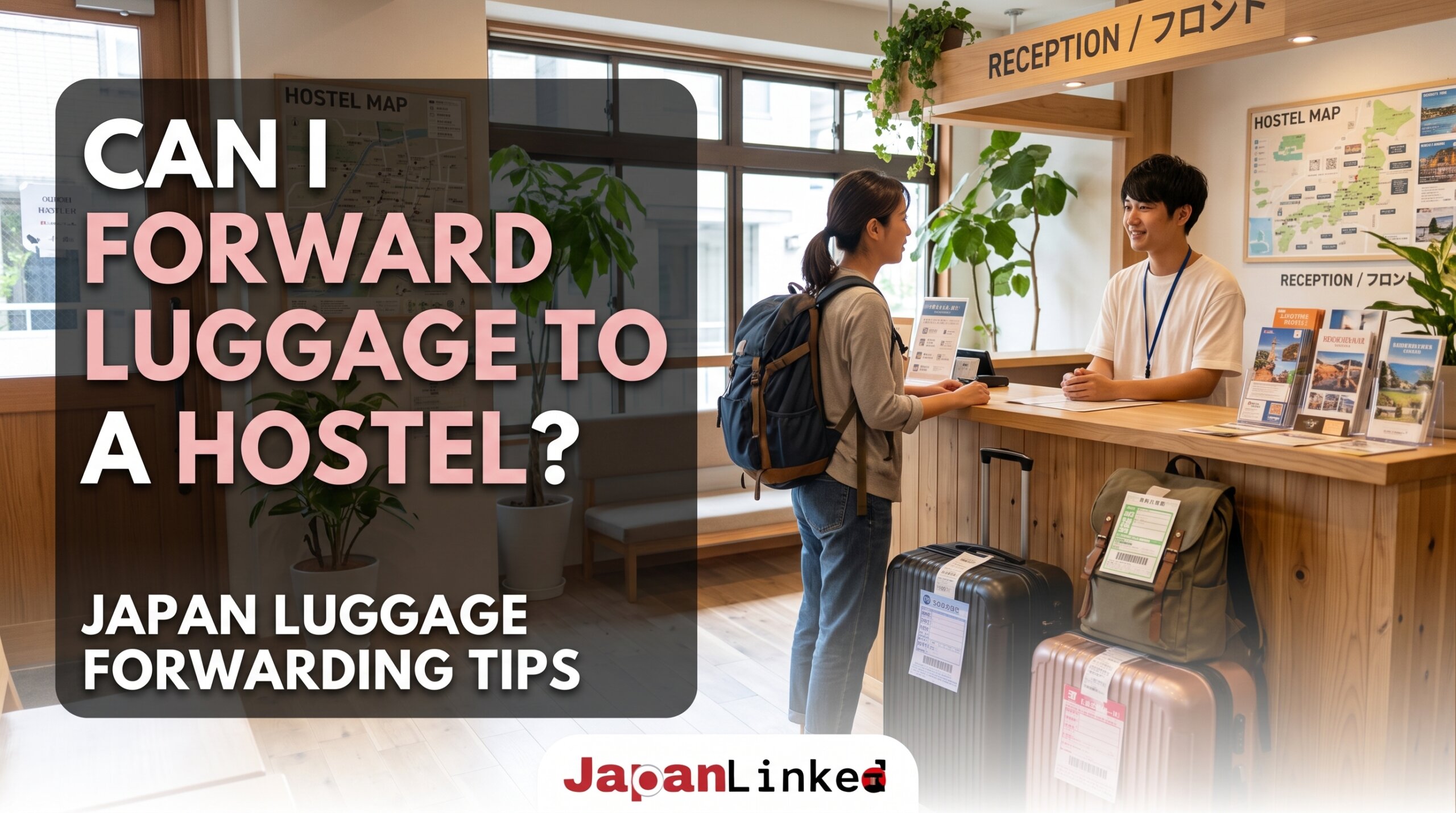
Japan’s luggage forwarding system is one of the best-kept travel secrets in the world. Millions of people travel the country without hauling a single suitcase onto a bullet train.
But when your accommodation is a hostel rather than a full-service hotel, the process gets a little more nuanced — and most travel guides skip right past it.
The short answer: yes, you can forward luggage to a hostel in Japan, but only if that hostel has a staffed front desk that can receive the delivery.
Not all hostels do. This guide explains exactly how to make it work, what to do when it won’t, and how to pay ¥2,000 instead of ¥10,000 for baggage fees.
What Is Luggage Forwarding in Japan?
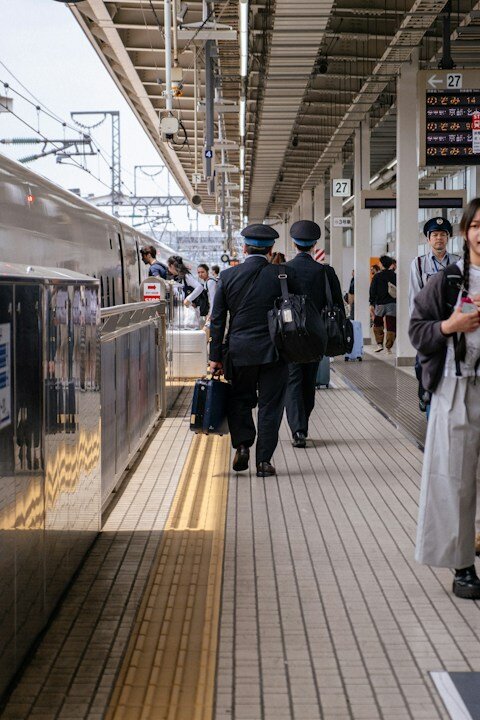
Japan’s luggage forwarding service is called takuhaibin (宅配便), also commonly referred to as takkyubin.
It is a nationwide, door-to-door delivery service originally launched by Yamato Transport in the 1970s that has since become an ordinary part of how Japanese people move things around the country.
Takuhaibin lets you send your luggage or parcels anywhere in the country — from hotel to hotel, airport to guesthouse, or even to a convenience store for pickup.
For travelers, it means shipping a suitcase from your Tokyo hotel to your Kyoto hostel the night before you travel, then riding the Shinkansen with only a small daypack.
The dominant provider is Yamato Transport, identifiable by the black cat (Kuroneko) logo found at hotel front desks across Japan. Sagawa Express and Japan Post run parallel networks, particularly at airports.
Can You Actually Send Luggage to a Hostel?
Takuhaibin can deliver to basically any address in Japan — private homes, offices, hotels, airports, and service centers.
However, if you intend to send luggage to a hostel, make sure to contact them before doing so, as not all properties may be able to accept deliveries due to lack of storage space.
That is the critical point. The service itself has no problem delivering to a hostel address. The question is whether the hostel can receive it.
What makes a hostel able to receive forwarded luggage:
- A staffed front desk that is open when the delivery arrives
- Physical storage space for incoming bags
- Willingness to hold luggage for a guest who has not yet checked in
What makes a hostel unable to receive it:
- Unmanned check-in (keypad entry, no staff on site)
- No storage room for incoming deliveries
- A policy against holding pre-arrival luggage
Most hostels in major cities are fine with accepting forwarded luggage, but some do not allow it due to space constraints. Always confirm directly with the hostel before sending anything ahead.
The rule is simple: call or email the hostel before you ship. One message — “Can you receive a Yamato takuhaibin delivery for me on [date] before I check in?” — is all it takes to confirm. Larger, well-run hostels in Tokyo, Osaka, and Kyoto handle these requests regularly and are very familiar with the process.
How to Forward Luggage to a Hostel: Step by Step

Using luggage forwarding in Japan is simple. Fill out a delivery slip with staff assistance, leave your luggage at the drop-off point, and your bags will arrive at the destination — usually the next day, with same-day delivery possible for short distances.
Here is the full process in plain steps.
Step 1: Confirm with the hostel Contact your destination hostel and confirm they can accept a takuhaibin delivery on the date you plan to ship. Get the exact Japanese address — including the postal code — in Japanese characters if possible. Many hostel booking confirmations include this.
Step 2: Choose your drop-off point You have several options:
- The front desk of the hotel or hostel you are currently staying at
- Any convenience store in Japan displaying a Yamato or Sagawa logo (Seven-Eleven, FamilyMart, Lawson)
- A Yamato or Sagawa service center
- A dedicated counter at Narita, Haneda, or Kansai International Airport
Step 3: Fill out the delivery slip All you need is a takuhaibin order form (denpyo), which courier companies provide for free — hotels and convenience stores will usually stock them. Fill in the destination address, your name and phone number as sender, the desired delivery date, and an optional time window.
Step 4: Pay and hand over the bag Pay at the counter. You receive a tracking slip. That is it. The driver picks up the bag and delivers it directly to the hostel.
Step 5: Pack a daypack for the transit day Your luggage arrives the next day in most cases. Pack a small bag with whatever you need for the transit period: change of clothes, toiletries, phone charger, documents, medication. Do not pack valuables like cash, passports, or credit cards in the forwarded bag — the service includes insurance for luggage up to ¥300,000 in value, but cash, valuable documents, and credit/debit cards are not covered.
How Much Does Luggage Forwarding Cost?
For a standard route between major cities, expect to pay ¥1,500 to ¥1,800 per bag within the same city or prefecture, ¥1,800 to ¥2,200 between major cities like Tokyo and Kyoto, and ¥2,000 to ¥2,500 for longer distances like Tokyo to Fukuoka.
One large suitcase of up to 25 kg can be sent from one address to another with guaranteed next-day delivery for just under ¥2,000, with smaller or lighter bags costing less. For forwarding to or from Hokkaido or Okinawa, allow two days for delivery.
| Route | Typical Cost Per Bag |
|---|---|
| Within same city (e.g. Shinjuku → Asakusa) | ¥1,200–¥1,800 |
| Tokyo ↔ Kyoto / Osaka | ¥1,800–¥2,500 |
| Tokyo ↔ Fukuoka | ¥2,000–¥2,700 |
| Tokyo ↔ Hokkaido | ¥2,000–¥3,000 |
| Airport → Hotel (with airport surcharge) | ¥2,500–¥3,800 |
To put that in context: a checked bag on a domestic Japanese flight or the airline baggage fees from overseas can easily exceed ¥3,000–¥5,000 per bag. Forwarding your luggage between accommodations at ¥2,000 a bag is genuinely cost-effective.
Where to Drop Off Your Luggage
From Your Current Hotel or Hostel
Most hotels in Japan can arrange luggage forwarding for guests. Ask at the front desk the evening before you plan to ship — front desks tend to be busy in the morning, so evening requests are handled more smoothly. Many hostels also offer this service through their front desk.
From a Convenience Store
The service is so widespread in Japan that most convenience stores offer it — look for Yamato or Sagawa logos and flags in the windows. Staff can help you through the process, and Google Translate handles any language gaps effectively.
Seven-Eleven, FamilyMart, and Lawson locations across Japan all accept takuhaibin drop-offs. This is the backup option when your hostel cannot arrange it directly.
From the Airport
Major airports including Narita, Haneda, and Kansai International have convenient counters in the arrivals hall where you can hand off luggage immediately after landing.
This is one of the most popular uses of the service: arrive at Narita, drop your big suitcase at the Yamato counter, spend the day in Tokyo with a daypack, and collect your bag at the hostel that evening or the following morning.
Note: airport-to-hotel delivery costs slightly more due to airport handling fees, and Yamato recommends shipping airport deliveries at least two days ahead for guaranteed arrival.
How Long Does Delivery Take?
Yamato and Sagawa both have near-perfect delivery records and time-window adherence. Most deliveries arrive the next day. Same-day delivery is possible for very short distances within the same city but should not be assumed.
| Shipping Scenario | Typical Delivery |
|---|---|
| Same city / prefecture | Next day (sometimes same day) |
| Tokyo → Kyoto / Osaka | Next day |
| Tokyo → Fukuoka / Sapporo | Next day |
| Tokyo → Hokkaido | 1–2 days |
| Okinawa routes | 2 days |
The practical rule: ship your luggage the day before you travel to your next destination. If you are leaving Tokyo for Kyoto on Wednesday, send the bag Tuesday evening.
What If Your Hostel Cannot Accept Luggage?
Some small or unmanned hostels genuinely cannot receive a takuhaibin delivery. When that happens, you have two reliable fallback options.
Option 1: Send to a Yamato service center for pickup If a hostel cannot accept luggage deliveries, locate a nearby Yamato service center where you can pick up your bags at a convenient time. You collect the bag yourself using your tracking slip and ID. This adds a quick errand but keeps the rest of the system intact.
Option 2: Use luggage storage (coin lockers or ecbo cloak) Japan’s train stations have extensive coin locker networks at varying sizes. For anything that will not fit a coin locker, ecbo cloak — a luggage storage service available at cafes, shops, and stations across Japan — charges around ¥600–¥1,500 per bag per day. It is a shorter-term storage solution, not forwarding, but useful for day trips or transit gaps.
Tips That Make the Whole System Work
Always confirm with the hostel first. One message before you ship prevents the scenario of your bag arriving at a location that cannot store it.
Keep essentials in a daypack. Treat the forwarded bag as if it will arrive tomorrow — because it will. Pack your travel day necessities separately.
Use the address in Japanese. Japanese characters on the address label reduce any chance of misdirection. Ask your hostel for their address in Japanese format if the booking confirmation only shows it in English.
Specify a delivery time window. Takuhaibin allows you to request a delivery time window (morning, afternoon, evening). Choose a window when hostel staff are definitely present — typically not early morning or late at night.
Arrange the evening before. Hotel and hostel front desks are busy in the mornings, so arranging luggage forwarding the previous evening gives staff time to handle the paperwork properly — especially useful before early departures.
Do not pack restricted items. Hazardous materials, live animals, and certain liquids are not accepted. This is rarely an issue for standard travel luggage.
Is Luggage Forwarding Reliable?
Yamato and Sagawa both have near-perfect delivery records in Japan. Lost luggage through takuhaibin is exceptionally rare.
The system handles millions of shipments daily and has been operating for over forty years. Travel communities consistently report it as one of the most stress-free parts of traveling Japan.
The only realistic risk is a missed delivery window if the hostel is unstaffed at the time of arrival — which is why confirming reception capability and specifying a delivery window matters.
The Bottom Line
Forwarding luggage to a hostel in Japan works exactly like forwarding to a hotel — as long as the hostel can receive it.
Confirm by message before you ship, use the convenience store or current accommodation as your drop-off point, pack a small daypack for the transit day, and pay roughly ¥2,000 per bag to never wrestle a suitcase up a staircase in Kyoto again.
The system is fast, cheap, insured, and absurdly reliable. Use it on every multi-city leg of a Japan trip. Once you do, carrying luggage onto a bullet train will feel like something other people do.
