
You’ve just spent a week in Japan, and your suitcase is half-full of the most incredible canned goods you’ve ever seen — miso-simmered mackerel, canned yakitori, peach desserts, and a novelty can of bread. Then the anxiety hits: will any of this survive customs?
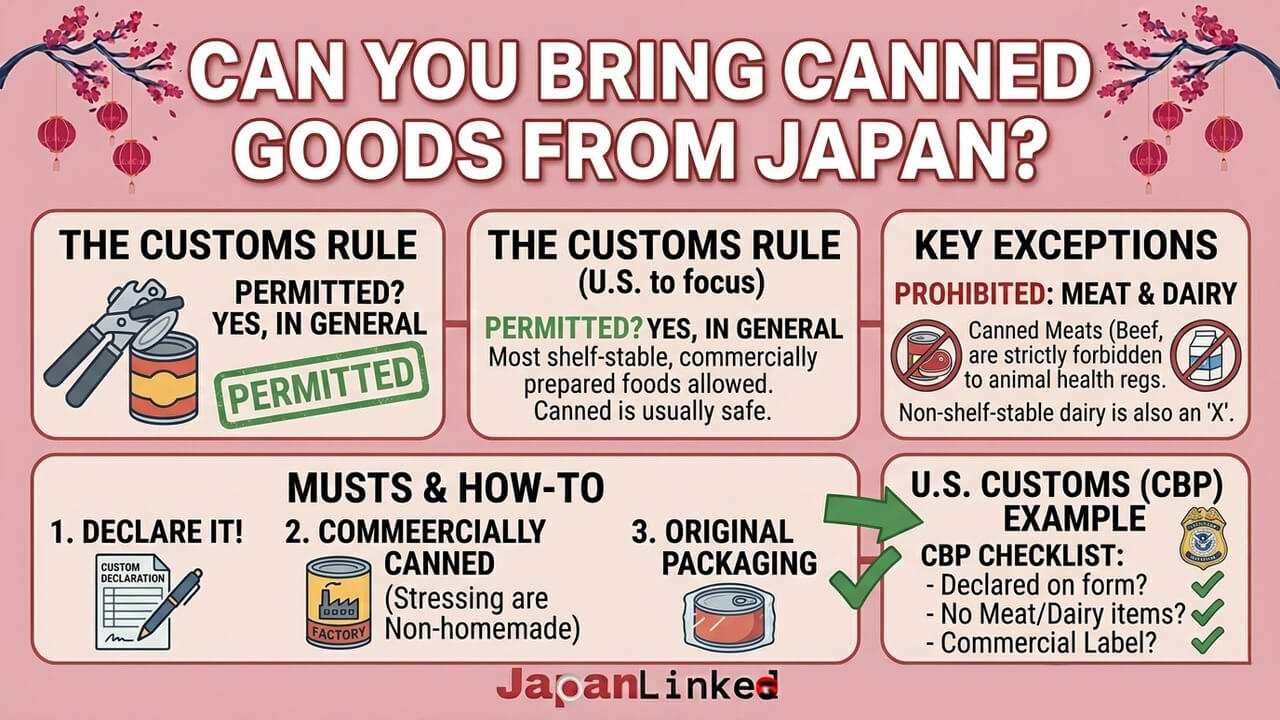
The good news? Bringing canned goods from Japan is almost always straightforward. Commercially sealed canned foods are among the easiest food items to travel with internationally.
But “almost always” is doing some work in that sentence, because a few specific canned items, particularly those containing meat or certain animal products, can run into trouble depending on your destination country.
This guide breaks down exactly what you can bring, what to watch out for, how to declare properly, and which countries have their own rules that might complicate your haul of Japanese kanzume (缶詰 — the Japanese word for canned food).
The Short Answer: Yes, Most Japanese Canned Goods Travel Just Fine
For the overwhelming majority of canned goods you’ll find in Japanese convenience stores, supermarkets, and souvenir shops, the answer is a confident yes — you can bring them home.
Commercially sealed canned products like soups, stews, canned fruits, canned vegetables, fish, and seafood are permitted items in most countries.
The heat-sterilization process used in commercial canning (called retorting) kills pathogens and makes the contents shelf-stable, which is exactly why customs authorities generally treat them differently from fresh or minimally processed foods.
The key phrase here is commercially sealed. A can you bought in a shop with intact labeling and an unbroken seal is in an entirely different category from home-preserved food or anything that’s been opened.
Keep cans in their original packaging, make sure the labels are intact and legible, and you’re starting from a strong position.
Also Read: Can You Bring Your Dog To Japan? & Can You Bring Your Cat To Japan?
What Japanese Canned Goods Are Safe to Bring Home?
Japan has a genuinely extraordinary canned food culture — kanzume is taken seriously here, and the variety will genuinely astonish you. Here’s a breakdown of what travels well:
Canned Fish and Seafood
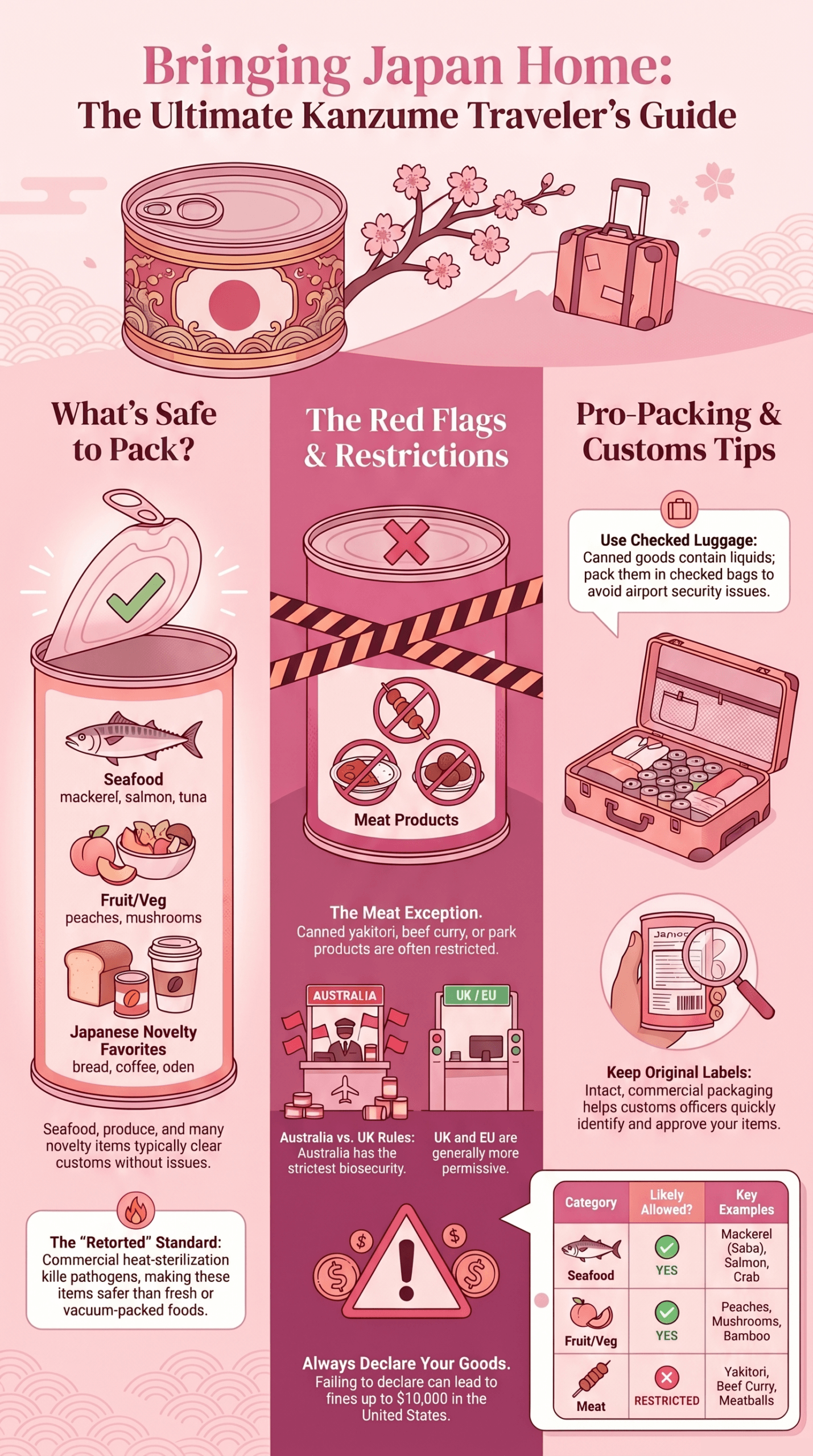
This is Japan’s sweet spot and the category most travelers are excited about. Canned tuna, salmon, mackerel (saba), sardines, crab, and octopus are all widely available and typically clear customs with no issues.
Japan’s canned mackerel in particular has had a cultural moment in recent years — rediscovered as a superfood, it now comes in flavors like plain, soy sauce, and miso-simmered.
Canned seafood from Japan is considered safe to import in the US, UK, Australia, and most other major destinations, because fish and seafood products generally face fewer restrictions than meat.
Australia does have a specific rule worth noting: canned fish must be retorted (cooked in a hermetically sealed container to commercial sterility) and the can must remain unopened and not require refrigeration.
Standard commercial cans from Japanese supermarkets meet this definition — vacuum-packed products, however, are not considered retorted and face stricter scrutiny.
Canned Fruit and Vegetables
Commercially canned fruits and vegetables — including Japan’s famous canned peaches, mandarin oranges, lychee, and mixed fruit cups — are generally permitted in most countries.
The canning process removes the biosecurity concerns that make fresh produce so heavily restricted. Countries that would confiscate a raw apple have no issue with its canned equivalent.
Canned vegetables like mushrooms, tomatoes, and mixed vegetables also travel without issue.
Canned Soups, Broths, and Processed Foods
Canned soups, noodle broths, miso soup concentrates, and other processed pantry items are generally allowed. Japan produces a remarkable range of these — from regional ramen bases to luxury dashi-based soups — and they make fantastic, packable souvenirs.
Novelty Japanese Canned Items
Japan is also famous for its novelty canned foods that double as perfect souvenirs:
- Canned bread (pan no kan): A genuine curiosity — fluffy, soft bread sealed in a tin. It’s shelf-stable, quirky, and absolutely fine to travel with.
- Canned oden: Japan’s beloved winter stew, now available in a can.
- Canned desserts: From anmitsu to fruit jellies, Japan has turned traditional sweets into canned form.
- Canned coffee and tea: Japan’s famous canned coffee (Boss Coffee, Georgia) is a cultural institution and travels perfectly well.
All of these are commercially prepared, shelf-stable, and easy to pack.
Also Read: Can You Import A Car From Japan? & How Can You Work In Japan?
The One Major Exception: Canned Meat Products
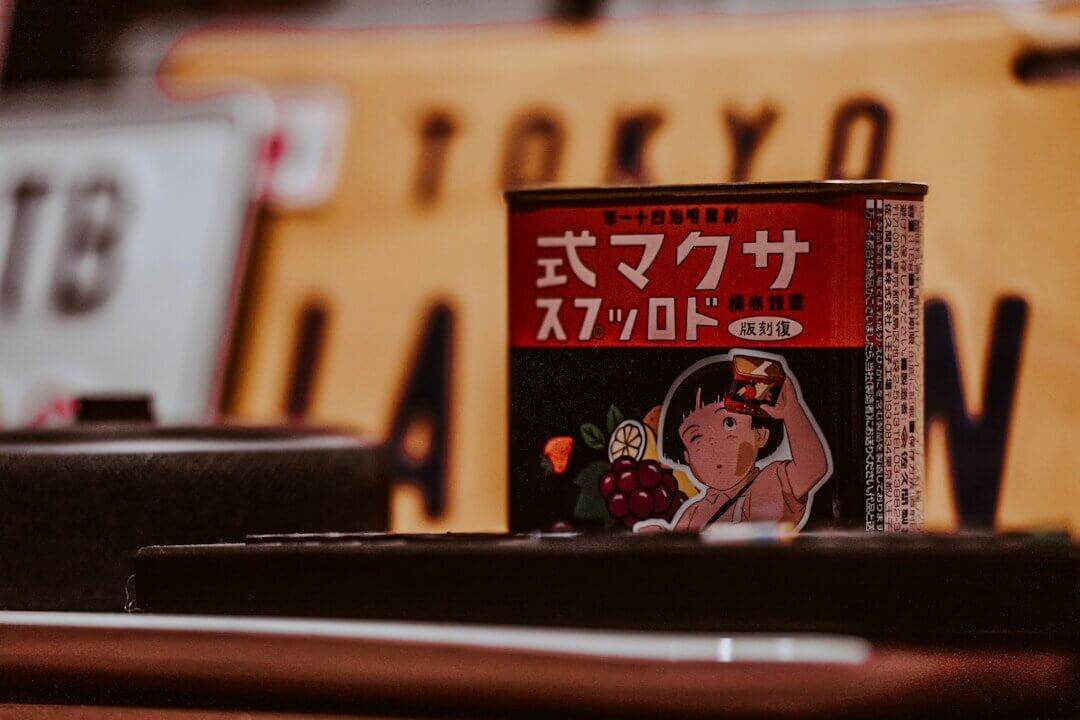
Here’s where it gets more complicated. Canned meat — particularly products containing beef, pork, chicken, or other livestock — is subject to restrictions in many destination countries, even if it’s commercially sealed.
This surprises many travelers. The intuition is that canned = safe, but biosecurity authorities in countries like Australia, New Zealand, the US, and Canada look at the source animal, not just the packaging format.
Livestock diseases like foot-and-mouth disease and African swine fever can, in theory, be transmitted through improperly treated meat products — and different countries have different thresholds for what counts as “properly treated.”
Specifically:
- Australia and New Zealand have some of the strictest rules in the world. Most canned meat products require an import permit or must meet specific treatment standards to enter. The Australian Department of Agriculture assesses meat products on a case-by-case basis, and items that can’t prove they meet Australian biosecurity conditions will be confiscated and destroyed.
- United States: The USDA’s Animal and Plant Health Inspection Service (APHIS) regulates meat imports strictly. Canned beef, pork, and poultry products from Japan may be subject to inspection, and some may be restricted depending on processing standards and labeling.
- Canada: Similar approach to the US — commercial canning processes are generally recognized, but it’s worth checking current CFIA (Canadian Food Inspection Agency) requirements for the specific product.
- UK and EU: Generally follow more permissive rules for commercially processed canned goods, but it’s still worth declaring any canned meat items.
The safest approach? If the can contains meat from land animals — beef, pork, chicken, lamb — declare it at customs and be prepared for inspection or confiscation. When in doubt, enjoy it in Japan and leave it behind.
Notable grey areas include:
- Canned yakitori (grilled chicken skewers in a can): A beloved Japanese otsumami snack that contains chicken — subject to meat import restrictions in strict countries like Australia.
- Canned curry with meat: Very popular in Japan as retort pouch meals; the meat content makes these subject to the same restrictions.
- Canned tori tsukune (chicken meatballs): Another popular Japanese product that will face scrutiny at Australian and NZ customs.
Country-by-Country Quick Guide
Bringing Japanese Canned Goods to the United States
The US is relatively accommodating for commercially canned seafood and produce. Canned fish, canned fruits, and canned vegetables from Japan pass through without issue.
Canned meat products are more complicated — the USDA evaluates them on whether they’ve been treated to commercial sterility standards.
Commercially produced, shelf-stable canned meats are often allowed, but it’s best to declare them and let customs make the call. Failing to declare food items can result in fines starting at $10,000.
Bringing Japanese Canned Goods to Australia
Australia has the strictest biosecurity regime of any major destination. Commercially retorted canned fish and seafood (up to 10kg per traveler) are permitted, provided the can is intact and unopened. Canned fruit and vegetables are generally fine.
Most canned meat products, however, face significant scrutiny and are likely to be confiscated unless they come with specific import documentation.
Always declare any food items — voluntary declaration means the goods are assessed, while failure to declare can result in substantial fines.
Bringing Japanese Canned Goods to the UK
The UK’s customs rules allow commercially prepared canned foods from Japan in reasonable personal quantities. Canned fish, seafood, fruit, and vegetables pass without issue.
Canned meat is permitted if it is commercially produced and shelf-stable, though it’s always worth declaring. The UK’s post-Brexit customs rules broadly align with the general principles for commercially processed foods.
Bringing Japanese Canned Goods to Canada
Canada generally allows commercially canned goods for personal use. The Canadian Food Inspection Agency (CFIA) governs food imports, and commercially sealed, shelf-stable products typically clear customs smoothly.
Canned meat products should be declared; while many are permitted, some categories may be restricted depending on the source country and processing standards.
How to Declare Canned Goods at Customs
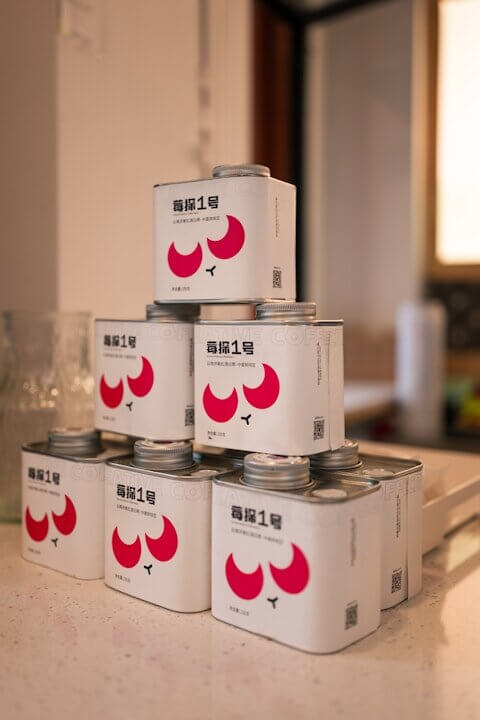
One of the most common mistakes travelers make is not declaring food items, either because they assume canned goods are fine or because they don’t want to slow down the process. Don’t make this mistake.
Always declare food items — including canned goods — on your customs declaration form. Here’s why this actually works in your favor:
- Declaring an item means it gets assessed. If it’s allowed, you walk through with it. If it’s not, it gets confiscated quietly.
- Failing to declare a prohibited food item is treated as a customs violation. In Australia, this can result in fines of several hundred dollars on the spot. In the US, undeclared agricultural items can trigger fines of $10,000 or more.
- Customs officers are generally reasonable. A commercially sealed can of Japanese mackerel with intact Japanese labeling rarely causes any drama at the declaration counter.
When filling out your declaration form, note “commercially sealed canned food products” in the food/plant/animal section. At the inspection point, show your items clearly and answer questions directly. The process typically adds just a few minutes.
Practical Packing Tips for Traveling with Japanese Canned Goods
A few practical things to keep in mind before you fill your suitcase with kanzume:
Weight adds up fast. Canned goods are heavy by definition. A dozen standard cans can easily add 5–8 kilograms to your checked luggage. Weigh your bag before heading to the airport.
Keep cans in original packaging. If you bought souvenir boxes with multiple cans, keep them in the original retail packaging. It helps customs officers quickly identify the contents without inspecting each item individually.
Check for damage. A dented, bulging, or damaged can may be flagged at customs regardless of its contents — and honestly, a compromised can isn’t safe to eat anyway. Travel with intact, undamaged products only.
Carry-on or checked luggage? Canned goods are fine in checked luggage. For carry-on, you’ll need to comply with liquid and gel rules – many canned goods contain liquid, and if a can is pierced or opened, the liquid contents could be subject to airline liquid restrictions. Keep cans sealed and in checked bags to avoid any airport security complications.
Mailing canned goods home. Shipping canned goods from Japan by mail or courier is generally possible for personal use quantities, but the same customs rules apply at the destination. Japan Post and private carriers like FedEx and DHL can ship them, but check the destination country’s import rules before sending.
Why Japan’s Canned Goods Are Worth Bringing Home
It’s worth pausing to appreciate just how good Japanese canned food actually is. Japan treats canned food as a serious culinary category — not a compromise or a convenience shortcut, but a legitimate form of food production with dedicated craftsmanship.
The canned mackerel category alone has spawned dedicated tasting events and coverage in food magazines.
Regional specialties — canned Hokkaido crab, Kyushu pork-bone ramen broth, Osaka-style oden — represent genuine local food culture in shelf-stable form.
Japan even has a Kanzume Festival where the best canned goods in the country are recognized and awarded.
For food-focused travelers, a selection of Japanese canned goods makes a far more interesting and personal souvenir than most airport gift shop options — and most of them will pass through customs without any drama at all.
Conclusion
Can you bring canned goods from Japan? For the vast majority of products — canned fish, seafood, fruit, vegetables, soups, and novelty items — the answer is a clear yes.
Commercially sealed canned foods are among the most travel-friendly food items you can carry, and Japan’s exceptional kanzume culture gives you no shortage of options.
The main caveat is canned meat. If your Japanese souvenir haul includes canned chicken, beef, or pork products, check the specific rules for your destination country – particularly if you’re headed to Australia, New Zealand, or parts of Canada, where biosecurity rules are strict.
When in doubt, declare everything and let customs make the call. The rule of thumb is simple: keep it commercially sealed, keep the labels intact, declare it at customs, and you can bring a little piece of Japan’s extraordinary food culture home with you.
