
Seven days in Japan is not a lot of time. Let’s just get that out of the way.
Japan is a country so layered, so rich, and so relentlessly interesting that seasoned travelers return year after year and still feel like beginners.
One week is the absolute minimum for a first visit — and if you approach it the wrong way, you’ll spend half of it on trains and the other half mildly overwhelmed.
But here’s the thing: a well-planned 1 week in Japan itinerary is genuinely enough to fall in love with this country.
Seven days, routed correctly, can take you from Tokyo’s electric chaos to Kyoto’s ancient temple corridors to Osaka’s legendary street food — leaving you with memories that outlast trips three times the length.
The key is making sharp decisions: where to go, where not to go, and how to move efficiently without spending your holiday on a Shinkansen platform.
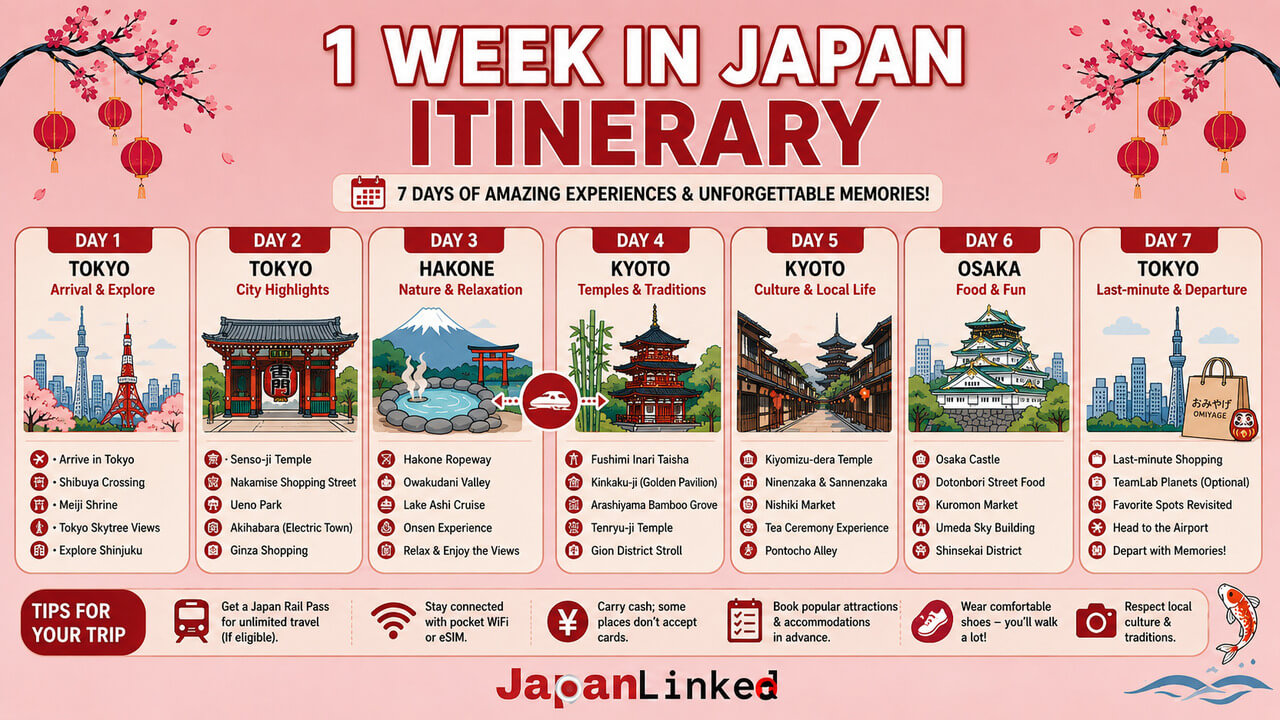
This guide gives you a realistic, day-by-day plan for 7 days in Japan – no padding, no filler, just an honest itinerary that actually works.
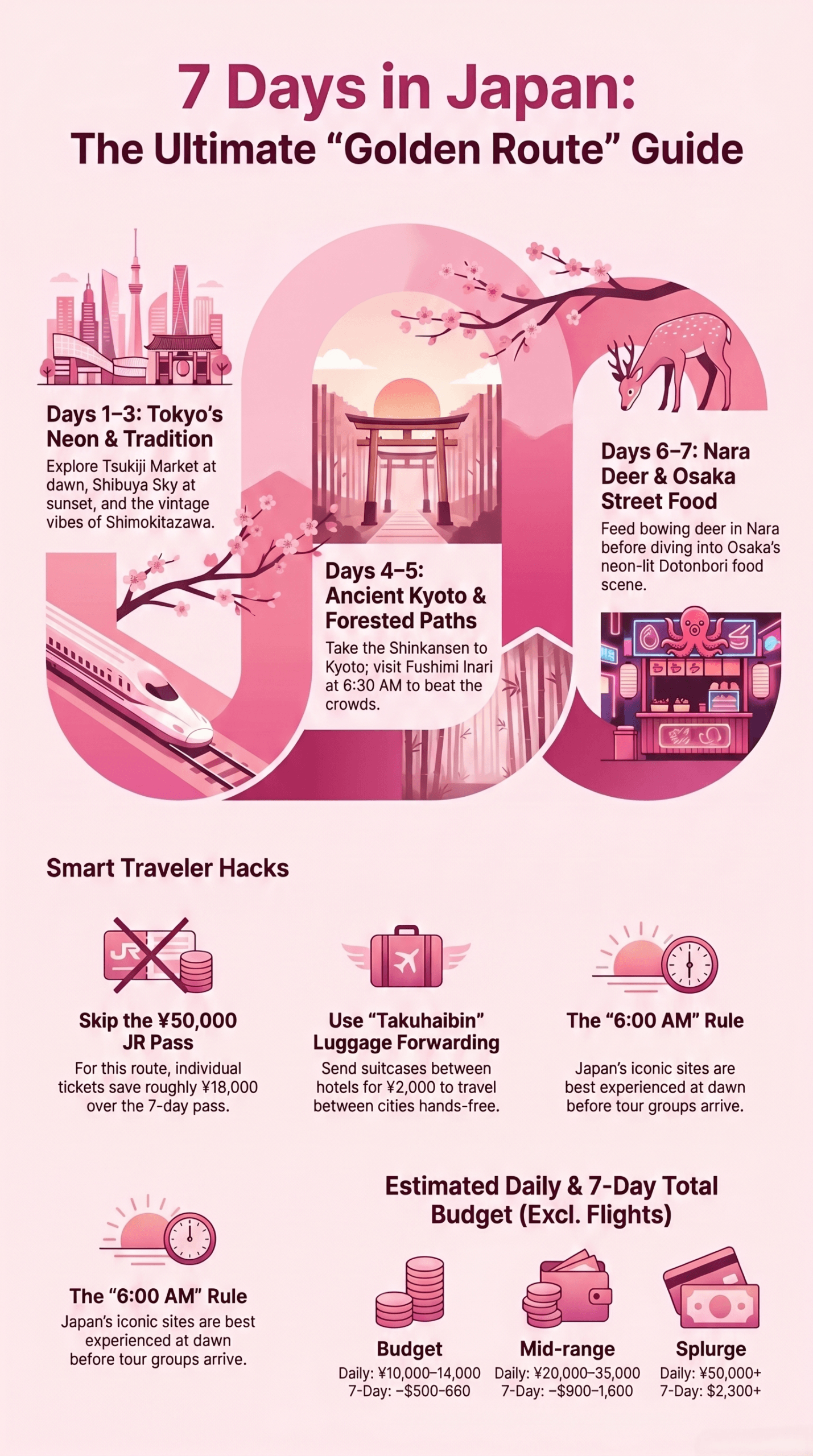
Before You Book: The Honest Advice No One Gives You
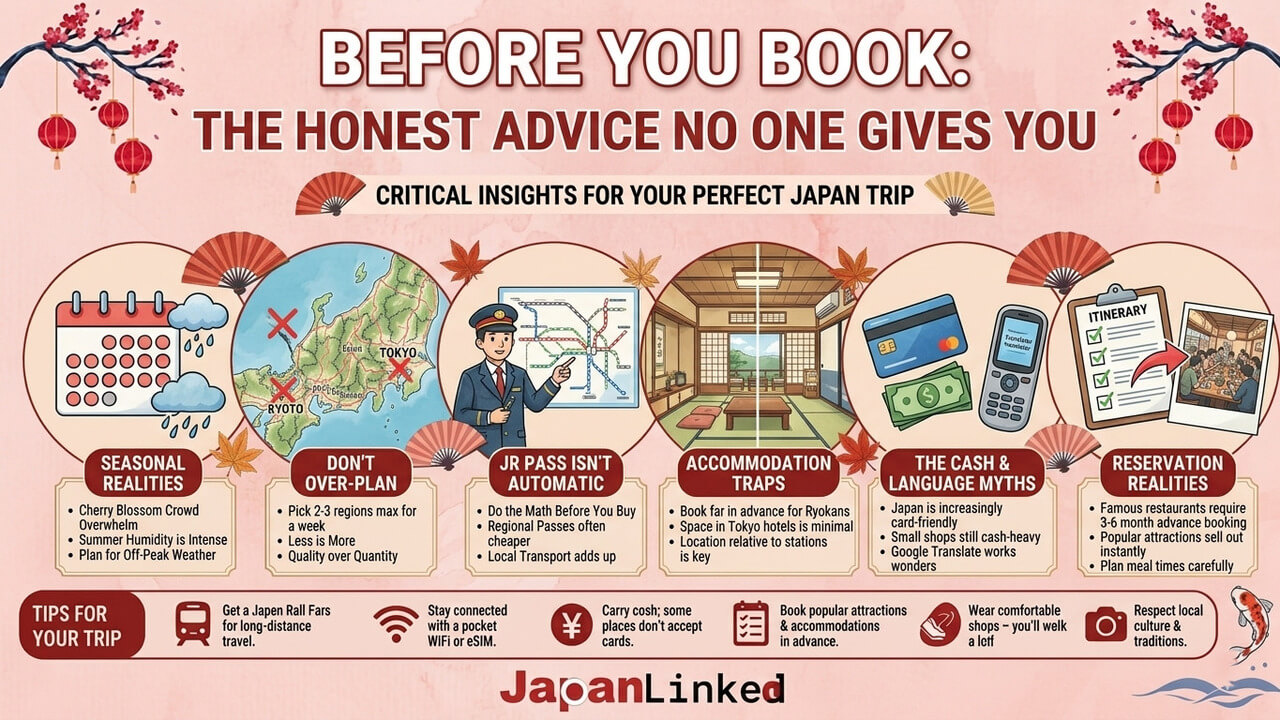
Skip the JR Pass for This Itinerary
Every “one week in Japan” article tells you to buy the 7-day Japan Rail Pass. Most of them are wrong — at least for this specific route.
The 7-day JR Pass costs ¥50,000 (~$330 USD) after a massive price hike in 2023. For the classic Tokyo → Kyoto → Osaka route that fits neatly into one week, the individual ticket math almost always wins.
A Tokyo–Kyoto Shinkansen is about ¥13,320 one way; even with a Kyoto–Osaka hop (¥1,200) and a return to Tokyo from Osaka (¥13,320), you’re spending roughly ¥32,000 total — saving nearly ¥18,000 over the pass.
The JR Pass starts to make sense if you’re adding Hiroshima or a day trip to Hakone. But for a tight one-week trip focused on the Golden Route, buy individual tickets online through Smart EX or at station machines. Purchase your Tokyo–Kyoto Shinkansen ticket before you travel and you’re done.
Do get a Suica or Pasmo IC card immediately on arrival. Load it with ¥5,000–7,000 and use it for every metro ride, bus, and convenience store purchase. It works across Tokyo, Kyoto, and Osaka without any planning.
Choose Your Entry City Wisely
Most international flights land at Tokyo (Narita or Haneda) or Osaka (Kansai International).
For a one-week trip, flying into Tokyo and out of Osaka (or vice versa) is smarter than round-tripping — it eliminates a full day of backtracking and stretches your usable time considerably.
Budget Snapshot
| Travel Style | Daily Budget | 7-Day Total (excl. flights) |
|---|---|---|
| Budget | ¥10,000–14,000 (~$65–95) | ~$500–660 |
| Mid-range | ¥20,000–35,000 (~$130–230) | ~$900–1,600 |
| Splurge | ¥50,000+ (~$330+) | $2,300+ |
Japan’s weak yen has made these numbers more favorable for international travelers than they’ve been in years. A bowl of ramen that cost $10 in 2019 often runs $6–7 today.
Mid-range here means a clean hotel, restaurant meals twice a day, and one or two paid attractions per day – perfectly comfortable.
Also Read: 2 Week Japan Itinerary & 3 Week Japan Itinerary
The 1-Week Japan Itinerary: Day by Day
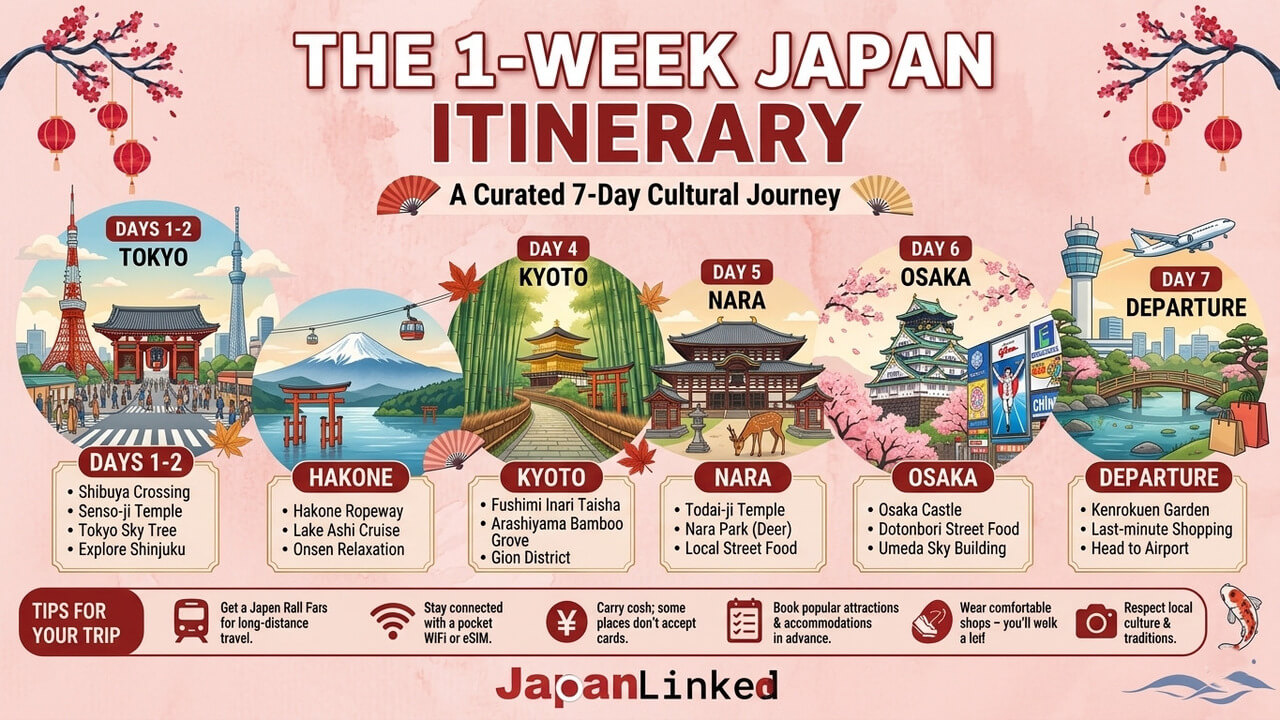
Days 1–3: Tokyo (3 nights)
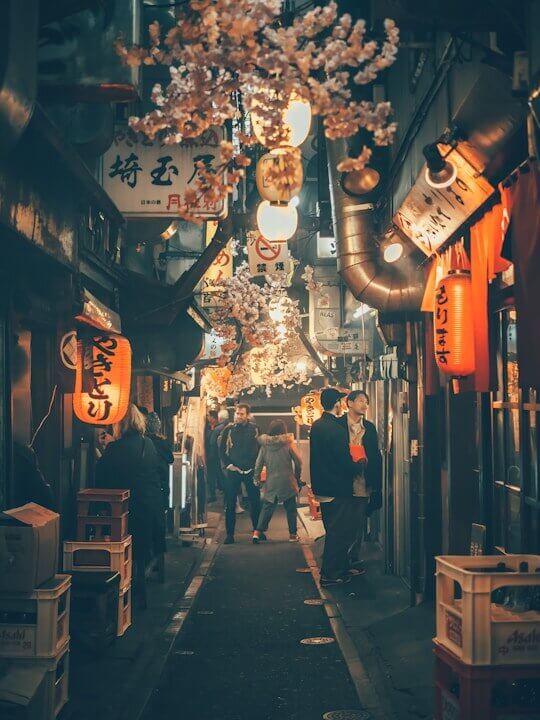
Arrive: Narita or Haneda Airport. Where to stay: Shinjuku or Asakusa — both put you within easy reach of multiple train lines
Three days in Tokyo is just enough to understand why people come back. The city contains multitudes: ancient temple complexes, neon-lit electronics districts, serene garden parks, and streets that feel as if they belong to five different decades simultaneously. Don’t try to see all of it. Pick neighborhoods and go deep.
Day 1: Land and Orient
Your first day is recovery, orientation, and one manageable experience.
- Tsukiji Outer Market — If jet lag has you awake at 5 AM (it will), this is the perfect use of those hours. The market opens around 5–6 AM. Fresh sushi for breakfast surrounded by vendors shouting and steam rising from grills is one of the great travel experiences, and it costs almost nothing
- Asakusa and Senso-ji — Tokyo’s oldest temple, with the giant red Kaminarimon gate that everyone photographs. Walk the Nakamise Dori shopping street. Aim for mid-morning before the tour groups arrive
- Slow evening in Shinjuku — Find a ramen shop in one of the backstreets of Shinjuku, watch the evening crowd fill the streets. That’s enough for Day 1
Day 2: The Tokyo You Came For
- Shibuya Crossing — The world’s busiest pedestrian intersection. Early morning (before 9 AM) or late evening gives you space to actually appreciate it instead of just surviving it. Book Shibuya Sky (the rooftop observation deck) 2–3 weeks in advance for sunset — it sells out
- Harajuku → Meiji Shrine — Start on Takeshita Street for the wild street fashion, then walk through the quiet forested path to Meiji Shrine, one of Tokyo’s most peaceful places. The contrast is jarring and wonderful
- Shimokitazawa for the afternoon — Tokyo’s most beloved neighborhood in 2026: independent bookshops, vintage boutiques, tiny live music venues, and some of the best coffee in the city. No tourist traps, just locals
Day 3: Day Trip to Kamakura or Nikko
Use your third day to escape Tokyo entirely.
- Kamakura (1 hour south by train, ¥920 each way) — A seaside temple town with the famous Giant Buddha (Kotoku-in), bamboo-lined paths at Hokokuji Temple, and shrines perched on forested hillsides. Relaxed pace, beautiful scenery, and very different energy from Tokyo
- Nikko (2 hours north, ¥2,720 each way on JR from Shinjuku) — Japan’s most ornate shrine complex, deep in mountain forest, with waterfalls and cedar avenues. Slightly more effort to reach but dramatically rewarding
Tokyo tip: Download Google Maps offline for Tokyo before you leave your hotel. The subway has 13 lines operated by multiple companies — even locals use apps. Having offline access as a backup when signal is patchy will save you real stress.
Day 4: Travel Day + Kyoto Arrival
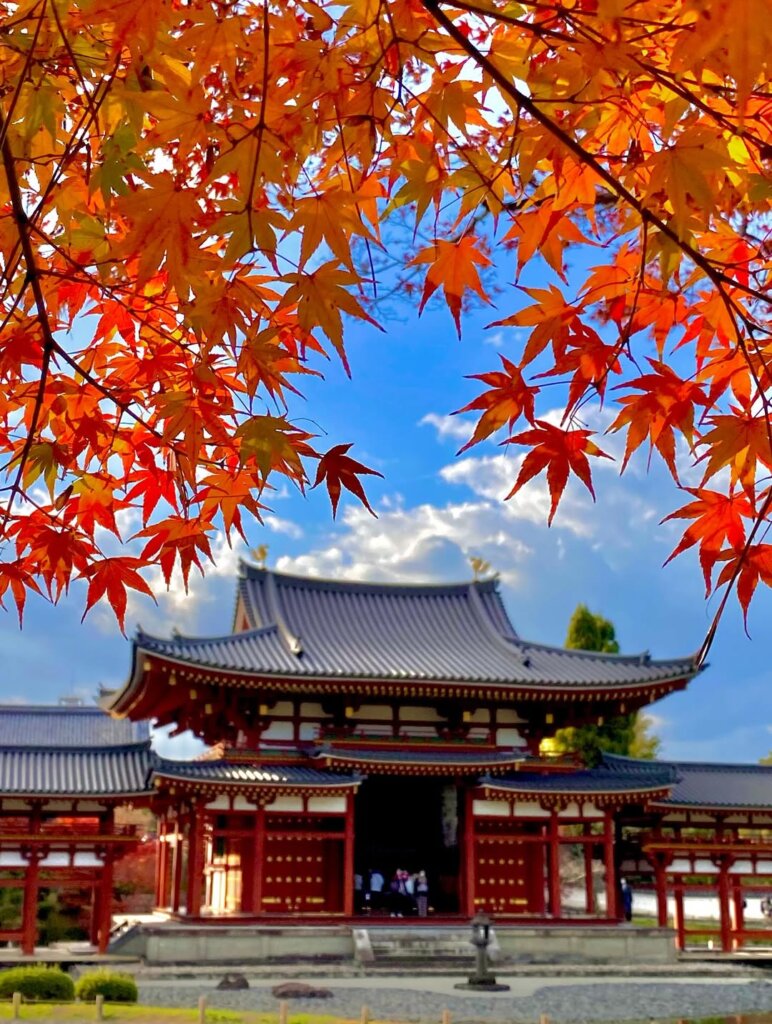
Shinkansen: Tokyo → Kyoto, approx. 2 hours 15 min (Hikari), ¥13,320 one way
This is the day the trip transforms. The bullet train ride itself is an experience – the countryside rushing past, the sudden perfect triangular silhouette of Mount Fuji appearing out your right window (seats D or E on the non-reserved cars give the best view), and then pulling into Kyoto to a completely different Japan.
- Take a morning Shinkansen to arrive in Kyoto by noon
- Store your luggage at the station (coin lockers everywhere) and start exploring
- Nishiki Market — A narrow, 400-meter covered market nicknamed “Kyoto’s Kitchen.” Stalls sell pickled vegetables, fresh tofu, grilled skewers, and matcha everything. Go hungry
- Fushimi Inari Shrine — 10,000 red torii gates winding up a forested mountain. The most important rule: go at dawn on Day 5, not this afternoon when it’s crowded. Today, scope the entrance in the late afternoon and walk the first few gates to get your bearings
- Check into your hotel. If you’re doing one ryokan night anywhere in Japan, Kyoto is the place
Day 5: Kyoto – The Essential Day
This is the day you plan your entire Japan trip around.
Dawn: Fushimi Inari
Leave your accommodation at 6:15 AM. Arrive at Fushimi Inari by 6:30. In that first hour, with early morning light filtering through the vermillion gates and the sound of crows echoing in the forest, you’ll understand why this is one of the most photographed places on Earth. By 9 AM it’s gridlocked. The difference is total.
Walk at least to the Yotsutsuji intersection halfway up the mountain — it takes about 40 minutes from the base and offers a panoramic view over Kyoto below. The full circuit to the summit takes about 2 hours round trip.
Morning: Higashiyama District
Return to central Kyoto and walk the Higashiyama preserved historic district — stone-paved lanes connecting Kiyomizudera Temple to the Gion neighborhood. This is the Japan of tourist brochures, and it earns every pixel.
- Kiyomizudera Temple — Built into a forested cliff with a wooden veranda extending over the valley. The main hall is genuinely stunning, and the surrounding temple complex is huge. Allow 90 minutes
Afternoon: Arashiyama
Take bus or train to the western outskirts.
- Arashiyama Bamboo Grove — The photos don’t lie, but they also don’t prepare you for the sound: thousands of bamboo stems creaking and rustling in the wind. You visited Fushimi Inari at dawn; most people sleep through that. This is your reward
- Tenryu-ji Temple and Garden — A UNESCO-listed Zen garden with a still pond, raked gravel, and mountains framed in the background. Quiet, deliberate, beautiful
Evening: Gion
Walk through Gion, Kyoto’s geisha district, between 5–8 PM. The Hanamikoji-dori street is the main lane — traditional wooden machiya townhouses, lanterns lit at dusk, and the occasional glimpse of a geisha or maiko moving between appointments. Don’t follow or photograph them — watch from a respectful distance.
Day 6: Nara Day Trip + Osaka
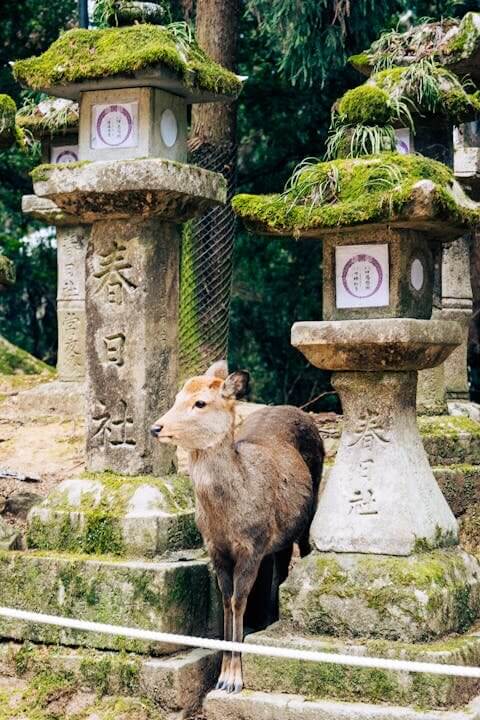
Morning: Nara from Kyoto (45 min by Kintetsu Express, ¥760) Evening: Osaka (30 min from Nara, or 15 min from Kyoto by Shinkansen)
Split your second-to-last day between two destinations. It sounds like a lot, but both are compact.
Morning in Nara
Nara was Japan’s first permanent capital and it shows — the scale of the temples and the serenity of the park feel ancient in a way that Kyoto, for all its beauty, sometimes doesn’t.
- Nara Park — Free entry, hundreds of freely roaming sika deer. They’ve learned to bow for deer crackers (¥150 from vendors at the entrance), which makes the whole experience verge on surreal. The deer are a UNESCO-protected natural treasure and have had the run of these grounds for over 1,200 years
- Todai-ji Temple (¥600) — The largest wooden building on Earth, housing Japan’s largest bronze Buddha. The Great Buddha Hall was rebuilt at two-thirds of its original size after the original burned down — and it’s still staggering. Nothing prepares you for the scale
- Kasuga Taisha Shrine — A vermillion Shinto shrine deep in the old-growth forest, lit by hundreds of stone lanterns. Free to enter the grounds
Leave Nara by early afternoon. Take the train to Osaka (30–45 min from Nara by JR, ¥740).
Afternoon and Evening in Osaka
Osaka is the antidote to Kyoto’s refinement. Loud, joyful, obsessed with food, and completely proud of all three. You only have a partial day, so focus.
- Dotonbori — The neon-lit canal district where every restaurant competes with giant mechanical crabs and 10-foot octopus sculptures for your attention. This is not subtle. Eat takoyaki (octopus balls) from a street stall, try kushikatsu (deep-fried skewers) at a standing bar — the local rule is no double-dipping the communal sauce, enforced with real seriousness
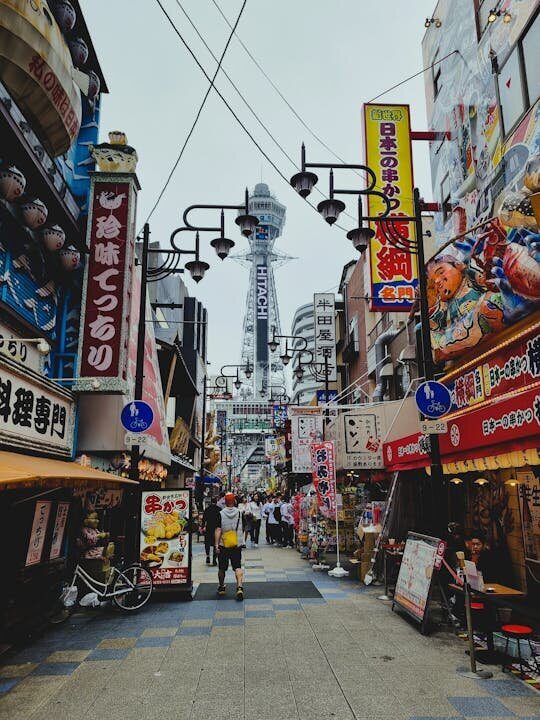
- Shinsekai — A 10-minute walk south: retro Osaka in its purest form. Old-school restaurants, neon signs for things that no longer exist, billiard halls, and fugu (pufferfish) restaurants on every corner. Strange and wonderful
- Kuromon Ichiba Market in the morning before sightseeing — if you want to eat the way Osaka locals eat, this covered market has been serving the city for over 200 years. Arrive hungry
Day 7: Osaka + Departure
Your final morning in Japan deserves one great experience before the airport.
Osaka Castle is worth seeing from the outside even if you skip the interior — the grounds and moat are genuinely beautiful, especially in morning light. The castle was first built in 1583 and became one of the most significant in Japanese history.
If time allows before your flight: Umeda Sky Building has one of Osaka’s best views from its floating garden observatory on the 39th floor — less famous than Shibuya Sky in Tokyo but equally stunning, and far less crowded.
Getting to Kansai Airport (KIX): The Haruka Express connects Osaka (Tennoji station) to the airport in about 30 minutes. Clean, efficient, and significantly easier than navigating Tokyo’s airport train options.
Also Read: 11 Days In Japan Itinerary & Can You Buy Suica Card In Japan?
How to Actually Survive 7 Days in Japan
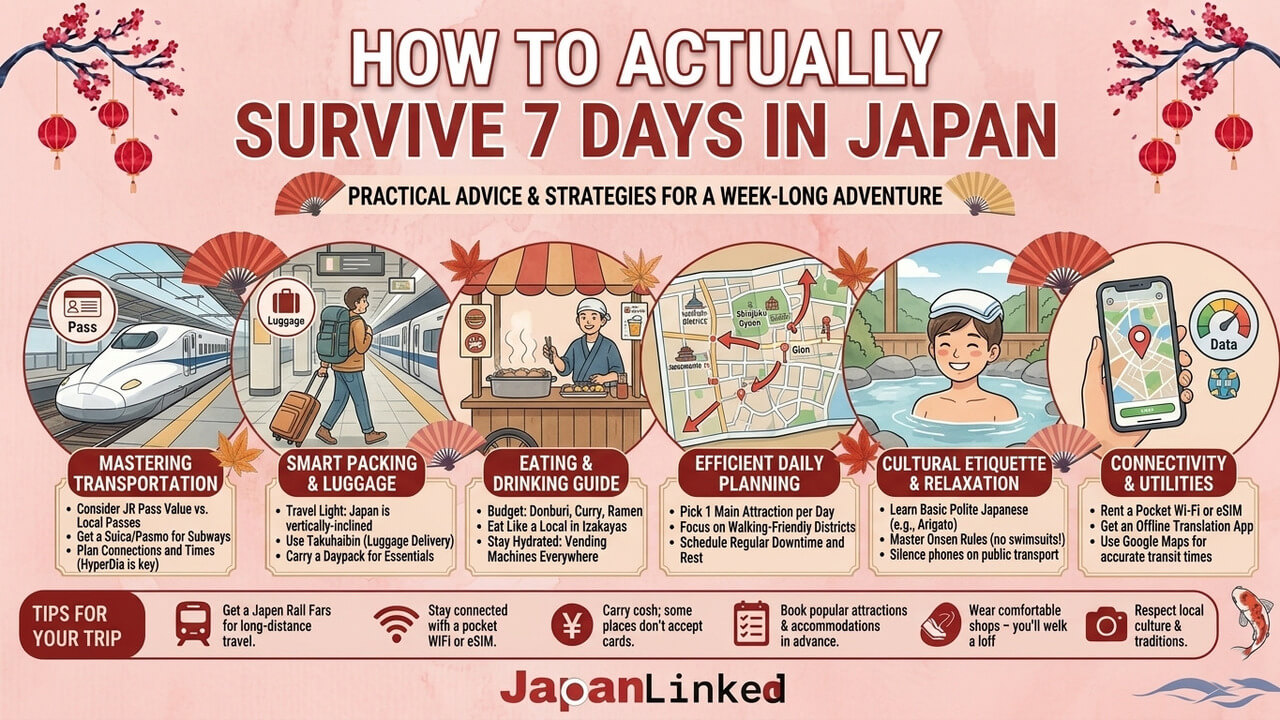
Wake Up Early — Every Single Day
Japan’s most iconic experiences are destroyed by crowds and saved by alarm clocks. Fushimi Inari at 6:30 AM versus 10 AM is a completely different place.
The same is true for Arashiyama, Senso-ji, and every popular shrine in Kyoto. Set your alarm. You’ll have jet lag anyway — use it.
Eat at Convenience Stores Without Shame
Japan’s 7-Eleven, FamilyMart, and Lawson stores serve food that would be a destination meal in most countries. Fresh onigiri (rice triangles) for ¥120, hot dishes from the counter, sandwiches, and desserts that rival any café.
Budget travelers eat multiple meals a day here and miss nothing. Mid-range travelers use them for breakfast and late-night snacks. Everyone uses them.
Use Luggage Forwarding (Takuhaibin)
For roughly ¥2,000 per bag, you can send your suitcase from your Tokyo hotel to your Kyoto hotel overnight — arriving before you do.
Travel from Tokyo to Kyoto completely hands-free, without dragging a roller bag through crowded Shinkansen cars. This is one of Japan’s most underrated services and works flawlessly.
Book These in Advance
Some Japan experiences require advance booking — sometimes weeks or months ahead:
- Shibuya Sky (observation deck) — book 2–3 weeks out
- teamLab Planets (digital art museum) — book 1–2 weeks out
- Ghibli Museum tickets — released on the 10th of each month for the following month; set a reminder and be ready
- Popular ryokans in Kyoto — 1–3 months ahead during cherry blossom or autumn foliage season
Don’t leave any of these to “figure out when we arrive.”
Download Google Translate with Japanese Offline Pack
Outside major tourist areas, Japan operates in Japanese. Menus, street signs, and station displays are often in kanji only.
The Google Translate camera function (point your phone at text, it translates in real time) handles 90% of situations. Download the Japanese offline pack before you leave — it works without data.
Best Time for a One-Week Japan Trip
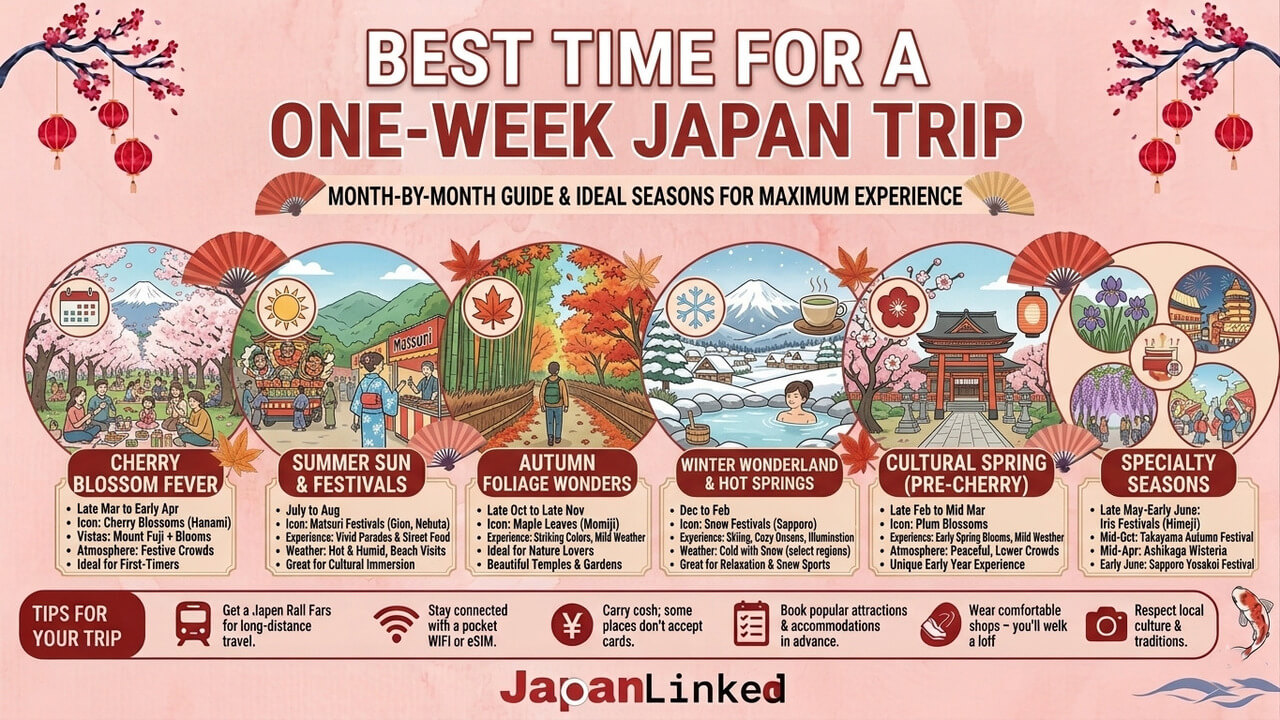
Seven days is precious, so choosing your timing matters more than on a longer trip.
| Season | Experience | Practical Note |
|---|---|---|
| Spring (late Mar–Apr) | Cherry blossoms at peak | Book everything 3–5 months ahead; prices spike |
| Autumn (Oct–Nov) | Vivid fall foliage, best weather | Book 1–2 months ahead; less intense than spring |
| Winter (Dec–Feb) | Fewest tourists, lower prices | Cold but manageable; Kyoto in snow is stunning |
| Summer (Jun–Aug) | Festivals, fireworks | Hot and very humid; June is rainy season |
Autumn is the most forgiving season for a first one-week trip. The weather is comfortable for walking, the foliage turns Kyoto’s temple gardens into something out of a painting, and the crowds — while present — are less extreme than cherry blossom season. October to mid-November is the window.
Avoid Golden Week (late April–early May) and the Obon holiday (mid-August) at all costs. Trains, temples, and hotels fill with domestic travelers, and the crowds at popular sites become genuinely unpleasant.
Conclusion
One week in Japan will leave you wanting more. That’s not a failure of the trip — it’s the highest compliment.
Japan is a country that rewards return visits, and the travelers who spend a week on their first trip almost universally start planning their second before they’ve landed home.
For now, the itinerary above gives you what matters most: the best of Tokyo, the soul of Kyoto, the joy of Osaka — plus Nara’s ancient deer park as a bonus that most people don’t realize fits in a single morning.
Wake up early, eat everything, get a Suica card, and let Japan surprise you. It will.
