
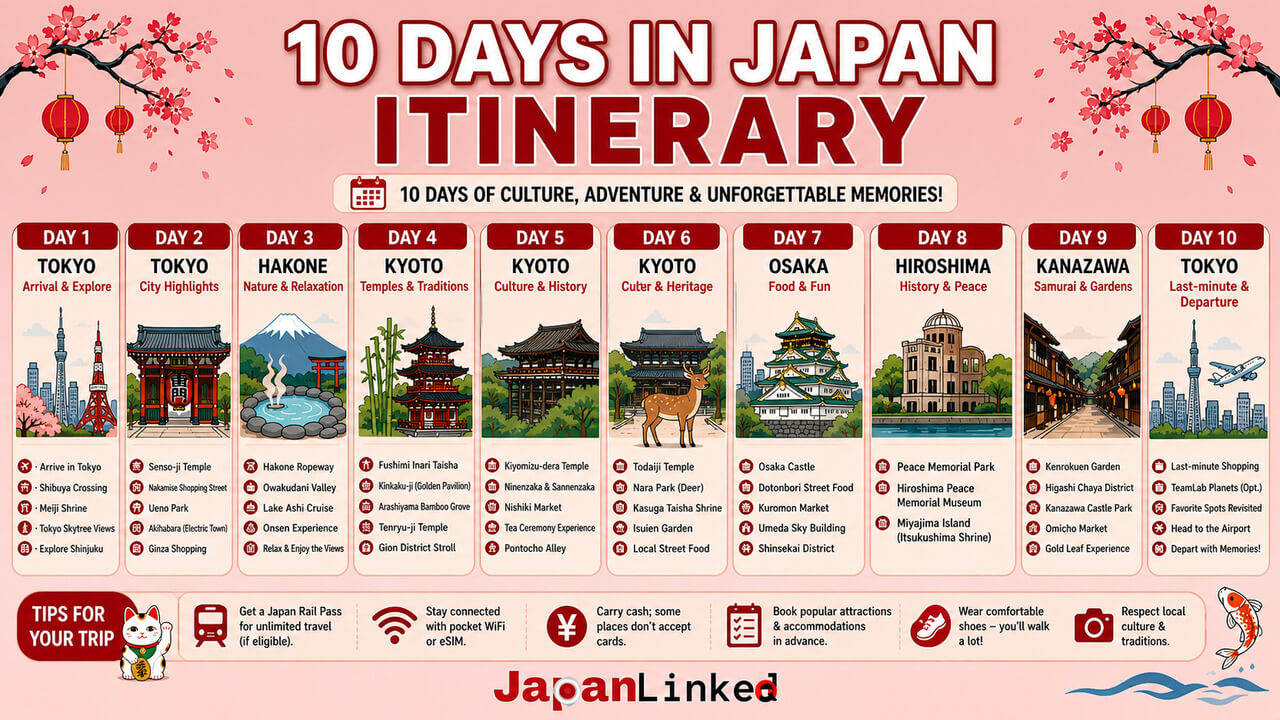
Ten days in Japan hit differently than seven. Not because you see twice as much – but because you finally have enough time to slow down.
With a week in Japan, every decision is a tradeoff. You can do Tokyo or you can do Hakone, but probably not both. You can visit Kyoto or squeeze in Hiroshima, but cramming both into a 7-day trip borders on masochistic.
10 days in Japan changes that equation entirely. It’s the first itinerary length where you can include the Golden Route’s full arc — Tokyo, Hakone, Kyoto, Hiroshima, Osaka — without feeling like you’re sprinting between bullet trains.
This 10-day Japan itinerary is designed for first-time visitors who want the essential experience done properly: the right pacing, honest transport advice, and the one or two additions that elevate the classic route into something you’ll talk about for years.
No backtracking, no wasted travel days, and plenty of room to eat your way through every city you land in.
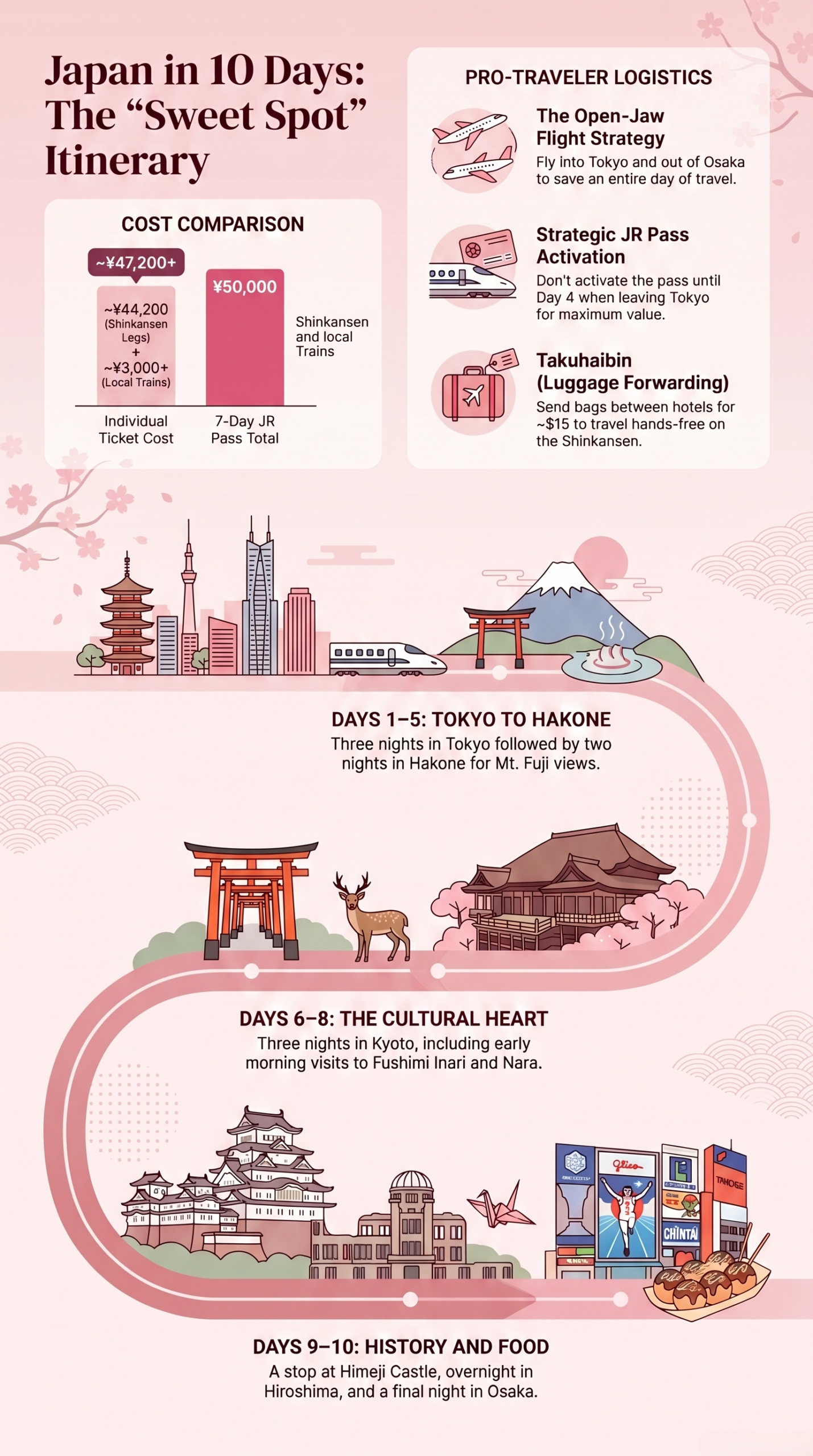
Planning Your 10-Day Japan Trip: What to Know First
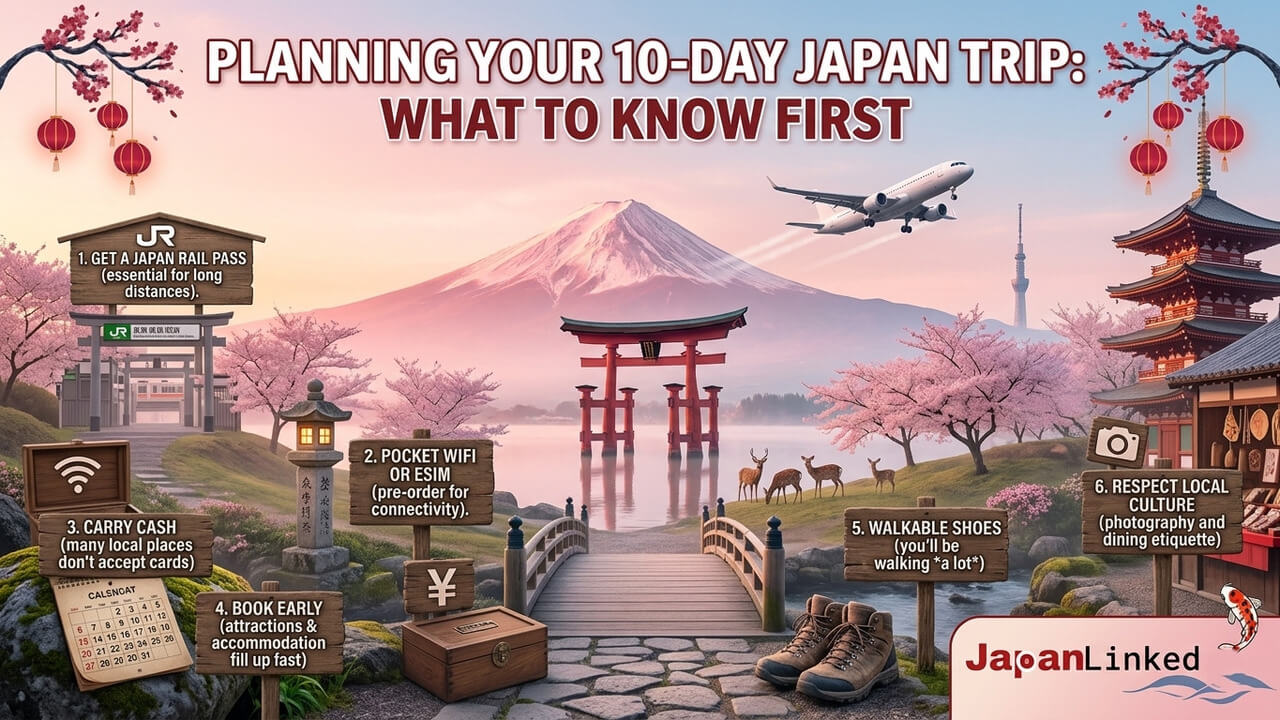
The Open-Jaw Flight Trick
The single smartest thing you can do before booking anything else: fly into Tokyo, fly home from Osaka.
Most major airlines offer this routing at little or no price premium over a round-trip, and it eliminates an entire day of wasted bullet train time getting back to your departure city.
The east-to-west flow of this itinerary — Tokyo → Hakone → Kyoto → Hiroshima → Osaka — is geographically clean, logistically smooth, and lets you end the trip in one of the world’s great food cities. That’s a win on every front.
JR Pass: The Math Finally Works for 10 Days
Here’s what most articles won’t tell you clearly: the 7-day JR Pass (¥50,000 / ~$330 USD) is often a bad deal for a simple Tokyo–Kyoto–Osaka trip, but this 10-day itinerary changes the calculation.
When you add Hakone (¥4,500 from Tokyo) and a leg to Hiroshima (¥10,960 one-way from Kyoto), the individual ticket total climbs past the pass price — especially once you factor in a Himeji stopover and the JR Ferry to Miyajima Island.
The key is: don’t activate the pass on Day 1. You’ll spend the first three to four days in Tokyo using the city subway, which the JR Pass doesn’t cover anyway. Activate it the morning you board the Shinkansen to Hakone or Kyoto, and let it run from there.
For the exact route in this guide, the JR Pass earns its keep. If you’re skipping Hiroshima or Hakone, run the numbers first before buying.
| Segment | Individual Ticket Cost |
|---|---|
| Tokyo → Odawara (Hakone gateway) | ¥4,270 |
| Odawara → Kyoto (Shinkansen) | ¥13,750 |
| Kyoto → Himeji (Shinkansen) | ¥5,700 |
| Himeji → Hiroshima (Shinkansen) | ¥8,970 |
| Hiroshima → Osaka (Shinkansen) | ¥11,510 |
| JR Ferry, Miyajima, local JR trains | ¥3,000+ |
| Total | ~¥47,200+ |
The pass covers all of this and more for ¥50,000. Add any JR local trains and it tips well in your favor.
Get a Suica Card on Arrival
Regardless of the JR Pass decision, pick up a Suica or Pasmo IC card the moment you land. These tap-and-go transit cards work on every subway, bus, and local train in Tokyo, Kyoto, and Osaka — and also at convenience stores.
Load ¥7,000–10,000 at the machine and top up as needed. New Welcome Suica cards for tourists are available at Narita, Haneda, and Tokyo Station and can be added to Apple Pay or Google Pay for seamless travel.
Also Read: 2 Week Japan Itinerary & 3 Week Japan Itinerary
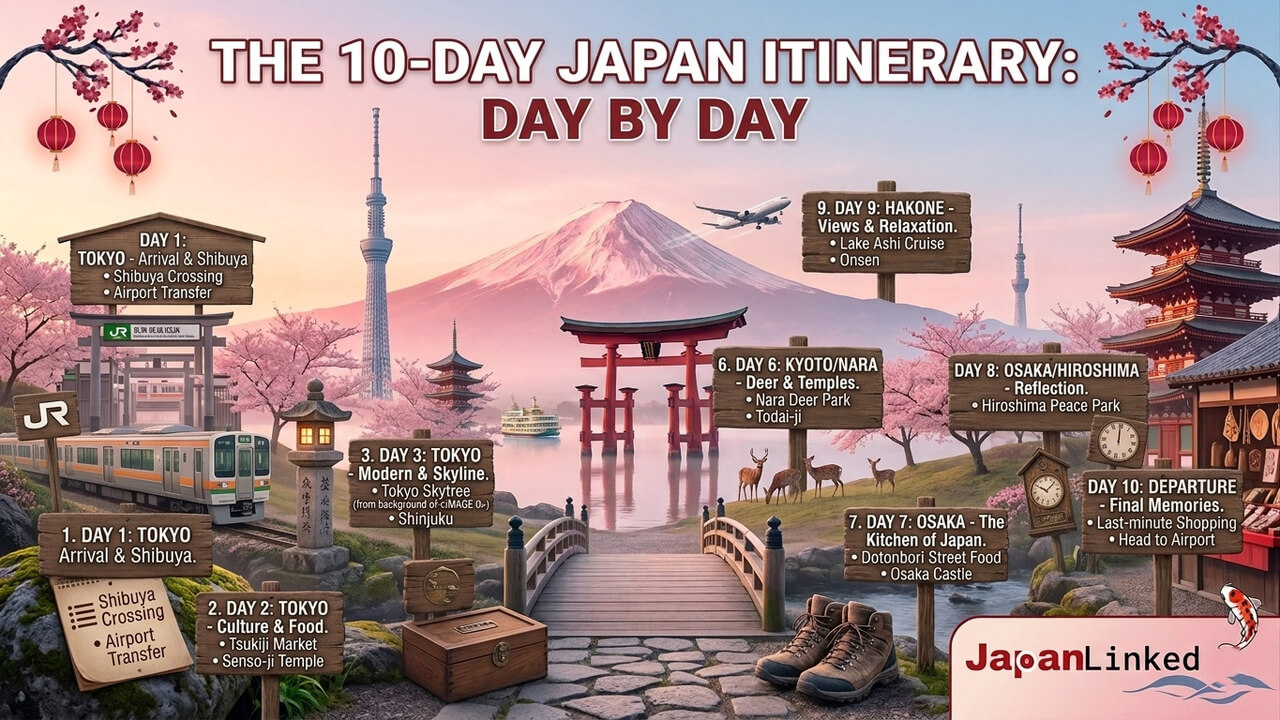
The 10-Day Japan Itinerary: Day by Day
Days 1–3: Tokyo (3 nights)
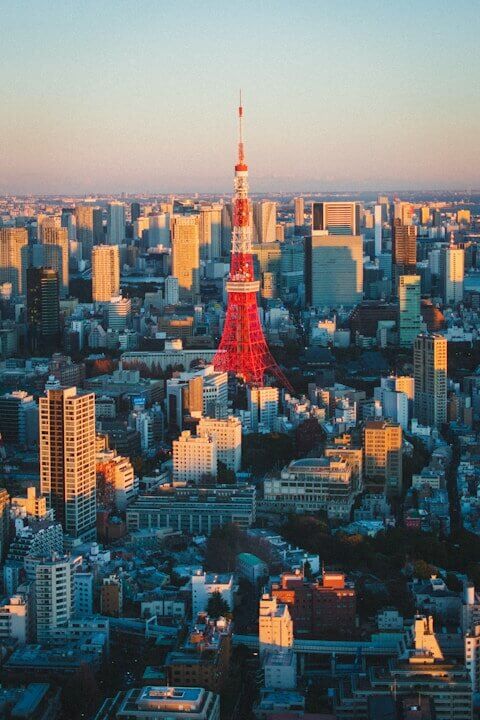
Where to base yourself: Shinjuku or Asakusa — both give you excellent transport links and a taste of two completely different versions of Tokyo
Three days in Tokyo is the minimum for a city that could swallow a month. The goal here isn’t to see everything; it’s to get a genuine sense of place before the rest of Japan unfolds.
Day 1: Land, Eat, Orient
Let jet lag work for you on this first morning.
- Tsukiji Outer Market opens at 5–6 AM. If you’re up before dawn (and you will be), fresh sushi for breakfast at a standing counter is the perfect first hour in Japan
- Asakusa and Senso-ji Temple — Tokyo’s oldest and most famous temple. Arrive before 8 AM to walk the Nakamise Dori shopping street in relative peace; by 10 AM it belongs to the tour buses
- Keep the evening light. Find a ramen shop, get familiar with the JR Yamanote Line loop that connects most of central Tokyo, and sleep early
Day 2: Neighborhoods and the View
- Shibuya in the morning — the crossing, Shibuya Sky observation deck (book 2–3 weeks ahead; sunset slots sell out), and the surrounding streets
- Harajuku for the fashionable chaos of Takeshita Street, then walk through the towering trees to Meiji Shrine — one of Tokyo’s most genuinely peaceful places, tucked against the edge of Yoyogi Park
- Shimokitazawa in the afternoon — the city’s most beloved neighborhood for independent shops, vinyl record stores, and coffee that rivals anything in Melbourne or Seoul
Day 3: Day Trip to Kamakura
An hour south of Tokyo by train, Kamakura is a seaside temple town that offers a completely different Japan from the capital.
- Kotoku-in Temple — home to the Great Buddha, a 13.35-metre bronze figure that has sat in open-air meditative calm since 1252
- Hokokuji Temple — a bamboo grove managed by a single Zen temple. Quieter and more intimate than Arashiyama, with a small tea pavilion inside the grove
- Walk the Daibutsu Hiking Trail between temples through forested ridgelines above the coast
Back in Tokyo for the evening. Dinner in Shinjuku — the Omoide Yokocho narrow alley of yakitori stalls is exactly as atmospheric as the photographs suggest.
Book before you go: teamLab Planets in Toyosu and the Ghibli Museum in Mitaka both require advance tickets purchased weeks ahead. Ghibli Museum tickets are released on the 10th of each month for the following month — set a reminder and move fast.
Days 4–5: Hakone and Mount Fuji (2 nights)
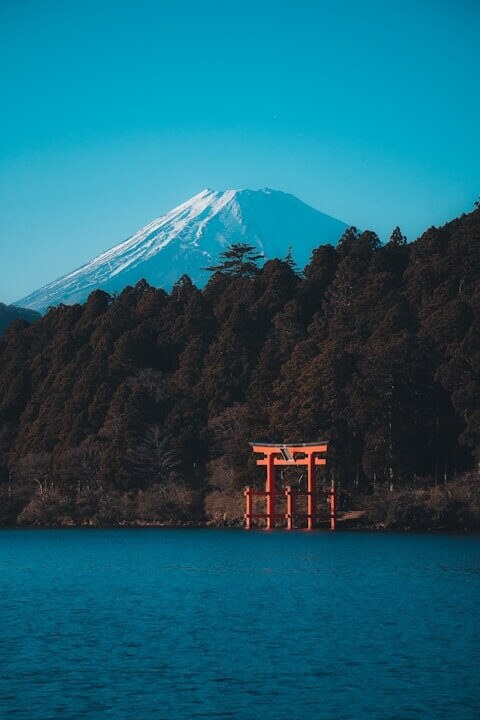
How to get there: Romancecar express from Shinjuku Station (~85 minutes), or Shinkansen to Odawara then local train
This is where many first-time visitors make their first mistake – trying to do Hakone as a day trip from Tokyo. Two nights here changes the experience entirely.
Hakone is a mountain resort town built around volcanic hot springs, dramatic scenery, and the single most iconic view of Mount Fuji in Japan. It deserves time.
Activate your JR Pass here if you’re using one, on the morning you leave Tokyo.
Day 4: Arrival + the Round Course
The Hakone Round Course strings together a series of transport types — mountain railway, cable car, ropeway over the active Owakudani volcanic vents, boat cruise across Lake Ashi, and bus back — into one of the most visually spectacular days available anywhere in Japan.
- Board the mountain railway (Hakone Tozan Line) up from Hakone-Yumoto through sharp switchbacks
- Ride the ropeway over Owakudani — billowing sulfur vents and, on a clear day, Mount Fuji filling the sky ahead
- Cross Lake Ashi by boat, with views of the floating torii gate at Hakone Shrine
Check-in to your ryokan. If you’re doing one traditional inn night in Japan, Hakone is a strong case – mountain air, outdoor onsen baths, futon bedding, and a multi-course kaiseki dinner. Ryokans in the ¥20,000–35,000 per person range (dinner and breakfast included) are mid-range here.
Day 5: Fuji Views + Hakone Open-Air Museum
- Lake Kawaguchiko — if you want the postcard shot of Mount Fuji reflected in still water, take the bus or local train to the nearest of the Fuji Five Lakes. Check weather forecasts the night before; cloudy days obscure the summit entirely
- Hakone Open-Air Museum — a hilltop sculpture park with 120 outdoor works, a Picasso pavilion, and sweeping mountain views. Allow 2–3 hours
- The Chureito Pagoda (near Fujiyoshida) offers the most photographed combination of pagoda, cherry blossoms (in season), and Mount Fuji — accessible by a short but steep staircase hike
Days 6–8: Kyoto (3 nights)
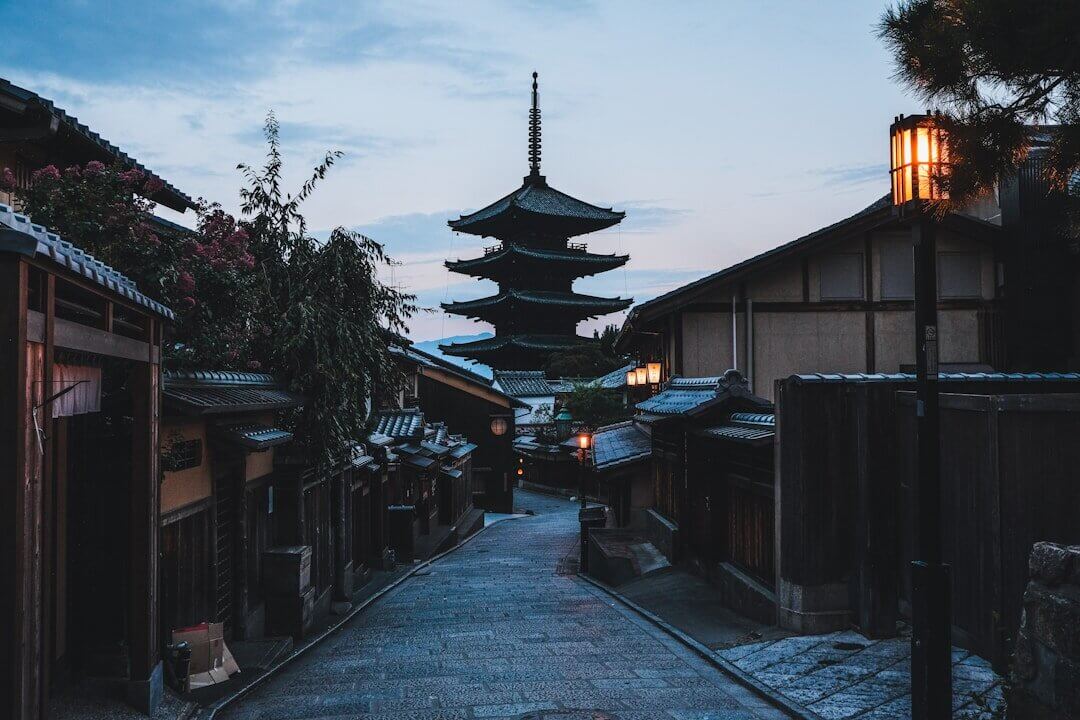
How to get there: Shinkansen from Odawara or Mishima to Kyoto, approximately 2 hours 15 minutes
Kyoto is the cultural heart of Japan — the city with more UNESCO World Heritage Sites than most entire countries. Three nights here strikes the right balance: enough to explore the essential experiences without making every day feel like a temple marathon.
Day 6: Eastern Kyoto — The Iconic Corridor
- Fushimi Inari Shrine — the tunnel of 10,000 red torii gates. Leave at 6:15 AM. At that hour the lower gates glow in early morning light with almost no one around. By 9:30 AM it’s a traffic jam of tour groups. Walk at least to the Yotsutsuji viewpoint halfway up — 40 minutes from the base and worth every step
- Kiyomizudera Temple — built into the forested Higashiyama hills with a wooden stage extending over the valley below. One of Japan’s most arresting views
- Higashiyama District — wander the stone-paved lanes connecting these temples in the late afternoon, when light softens and the machiya wooden townhouses take on warmth
Evening in Pontocho — Kyoto’s narrow lantern-lit dining alley running parallel to the Kamo River. Small restaurants, open kitchen counters, and excellent food in every direction.
Day 7: Western Kyoto and Arashiyama
- Arashiyama Bamboo Grove — another dawn visit (before 7 AM) repaid tenfold. The sound of bamboo rustling in the wind, the green light filtering down, the near-silence — it’s extraordinary
- Tenryu-ji Temple Garden — a UNESCO-listed masterpiece of Zen landscape design, with a central pond framing borrowed scenery from the surrounding forested mountains
- Kinkaku-ji (Golden Pavilion) in the afternoon — the gold-leafed Zen temple reflected in its mirror pond is one of Japan’s quintessential images. It’s busy, but genuinely beautiful
Day 8: Nara Day Trip + Gion Evening
Nara is 45 minutes from Kyoto by Kintetsu Express (¥760 one way) and ranks among Japan’s most memorable half-days.
- Nara Park — hundreds of freely roaming sika deer that bow for crackers (¥150 from vendors near the entrance). They are a UNESCO natural treasure and have wandered these grounds for over 1,200 years
- Todai-ji Temple (¥600) — Japan’s largest bronze Buddha inside the largest wooden building on Earth. The scale in person is genuinely shocking; nothing quite prepares you for it
- Kasuga Taisha Shrine — a vermillion Shinto shrine deep in old-growth forest, lit by hundreds of stone lanterns
Back in Kyoto by late afternoon. Walk Gion in the early evening — specifically the Hanamikoji-dori street between 5–8 PM for the highest chance of spotting a geisha or maiko in transit between appointments.
Kyoto tip: Book a traditional matcha tea ceremony online before your trip (¥1,500–3,500, about 1 hour). The ones in the Higashiyama area are especially atmospheric.
Day 9: Himeji + Hiroshima (overnight in Hiroshima)
How to get there: Shinkansen from Kyoto to Himeji (~45 min, ¥5,700), then Shinkansen from Himeji to Hiroshima (~1 hour, ¥8,970)
This is the boldest day of the itinerary – two stops, real travel, and some of the most meaningful experiences available in Japan.
It works because Himeji sits directly on the Shinkansen line between Kyoto and Hiroshima, making it a natural stopover rather than a detour.
Leave Kyoto Station by 8:00 AM. Store your main luggage in Himeji Station lockers on arrival.
Himeji (9:00 AM – 12:30 PM)
Himeji Castle is Japan’s finest surviving original castle — a white-plastered, multi-tiered masterpiece nicknamed “The White Heron” that has stood since 1609 without major damage from war or earthquake. It was designated a UNESCO World Heritage Site in 1993.
- Walk the 15 minutes from Himeji Station through the broad castle approach
- The castle interior (¥1,000) takes about 60–90 minutes to explore, including the steep climb to the top floor and sweeping views over the city
- Kokoen Garden (¥310, entry combined with castle) — a connected traditional Japanese garden of nine separate walled sections. Quiet, beautiful, and largely overlooked by visitors who rush straight to the castle
Return to the station by 12:30 PM. Collect luggage and board the 12:45–1 PM Shinkansen to Hiroshima.
Hiroshima (2:00 PM onwards)
Check in, drop bags, and walk to the Peace Memorial Park. This is not a light afternoon — but it’s one of the most important things you can do on any Japan trip.
- Hiroshima Peace Memorial Museum — among the most affecting museums in the world. Allow 2 full hours. The rebuilt city visible through the windows as you exit creates a contrast that stays with you
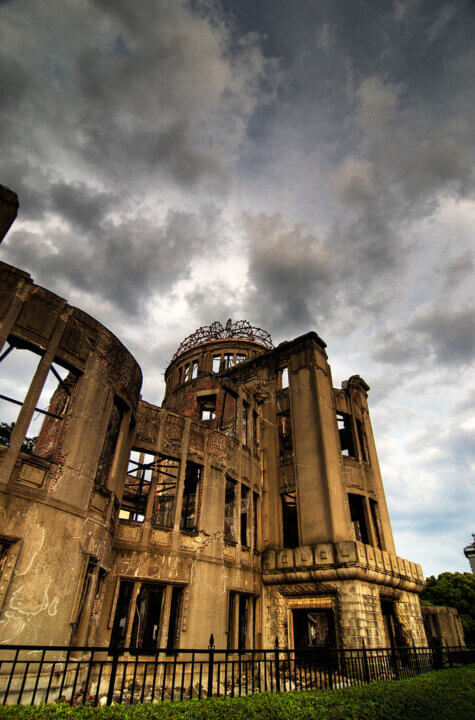
- Genbaku Dome (A-Bomb Dome) — the single reinforced concrete building that survived near the hypocenter, preserved exactly as it stood on August 6, 1945. Standing in front of it, with the modern city of Hiroshima thriving in every direction, is a genuine reckoning
Dinner: Hiroshima-style okonomiyaki at Okonomimura – a five-story building dedicated entirely to this city’s layered, noodle-filled version of the savory pancake.
It’s completely different from Osaka’s style and, to many people, better. Choose a stall, sit at the counter, and watch it made in front of you.
Day 10: Miyajima Island + Osaka (depart)
How to get there: JR Sanyo Line from Hiroshima to Miyajimaguchi Station (25 min), then JR Ferry to Miyajima (10 min). Ferry is free with JR Pass.
End the trip on one of the most beautiful islands in Japan.
Miyajima is home to Itsukushima Shrine and its great floating torii gate – one of Japan’s three official “views of scenic beauty” and one of the most photographed images in the entire country.
At high tide the vermillion gate appears to stand in the open sea. At low tide you can walk right up to its base. Check tide tables the night before; both are worth seeing.
- Itsukushima Shrine (¥300) — the main complex of shrine buildings connected by covered walkways over the water
- Mount Misen — hike or take the ropeway (¥2,000 round trip) to the 535-metre summit for panoramic views across the Seto Inland Sea
- Wander the island’s main street for momiji manju — maple leaf-shaped cakes filled with red bean paste, the island’s signature sweet, eaten fresh from the bakeries that line the street
The friendly deer here are smaller and shyer than Nara’s, but equally charming.
Afternoon: Shinkansen to Osaka (~1.5 hours, ¥11,510 or JR Pass).
You arrive in Osaka with an evening to spare. Drop your bags and head directly to Dotonbori – the neon-blazing canal district that is Japan’s purest expression of the philosophy kuidaore (eat until you drop).
Takoyaki from a street stall, kushikatsu at a standing bar, and a walk along the canal is the perfect final night in Japan.
Fly home from Kansai International Airport (KIX) — 30 minutes from central Osaka on the Haruka Express.
Also Read: 11 Days in Japan Itinerary & 1 Week Japan Itinerary
Essential Tips for 10 Days in Japan
Wake Up Before the Crowds
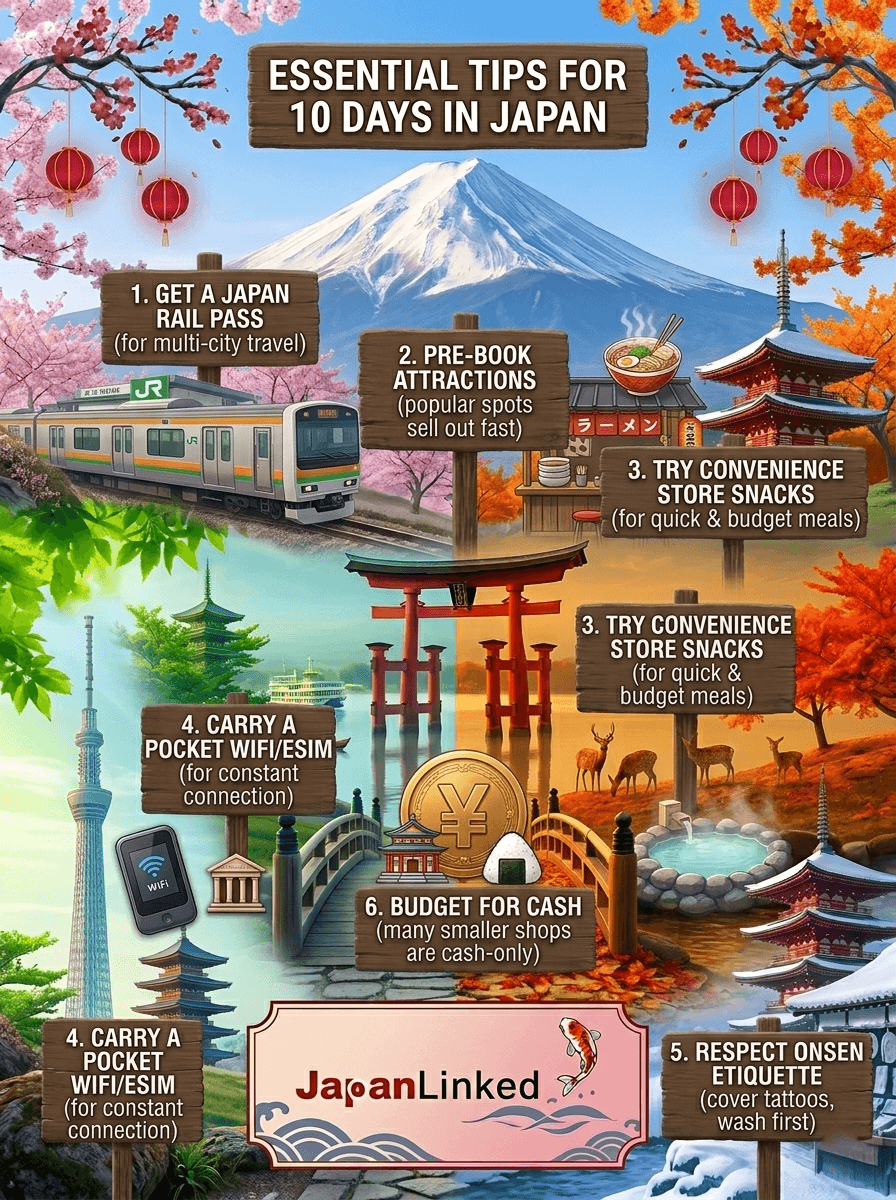
Japan’s most-photographed locations are ruined by crowds and redeemed by early mornings. Fushimi Inari before 7 AM, Arashiyama Bamboo Grove before 7 AM, Senso-ji before 8 AM — each one transforms completely. Set your alarm. The jet lag from your first few days is actually your ally here.
Use Luggage Forwarding Between Cities
Takuhaibin – Japan’s luggage forwarding service – costs around ¥2,000 per bag to send your suitcase from one hotel to the next, arriving the following day. Travel Tokyo → Hakone → Kyoto entirely hands-free, without wrestling a roller bag through crowded Shinkansen carriages. Ask your hotel’s front desk; they handle it as routine.
Convenience Stores Are Not a Last Resort
7-Eleven, FamilyMart, and Lawson in Japan are legitimate food sources. Fresh onigiri, hot dishes from the counter, desserts that rival any café, and cold drinks at all hours – budget travelers can eat multiple meals a day here without sacrificing quality.
Mid-range travelers use them for breakfast. Everyone uses them for late-night snacks after dinner. Embrace them.
Note the 2026 Tax-Free Shopping Change
From November 1, 2026, Japan’s tax-free shopping system changes from an in-store 10% discount to a refund-at-departure model – you pay full price and claim the rebate before boarding your flight. If you’re traveling before November 2026, the old system still applies. Keep your receipts either way.
Best Time to Visit Japan for 10 Days
| Season | What You Get | Key Watch-Out |
|---|---|---|
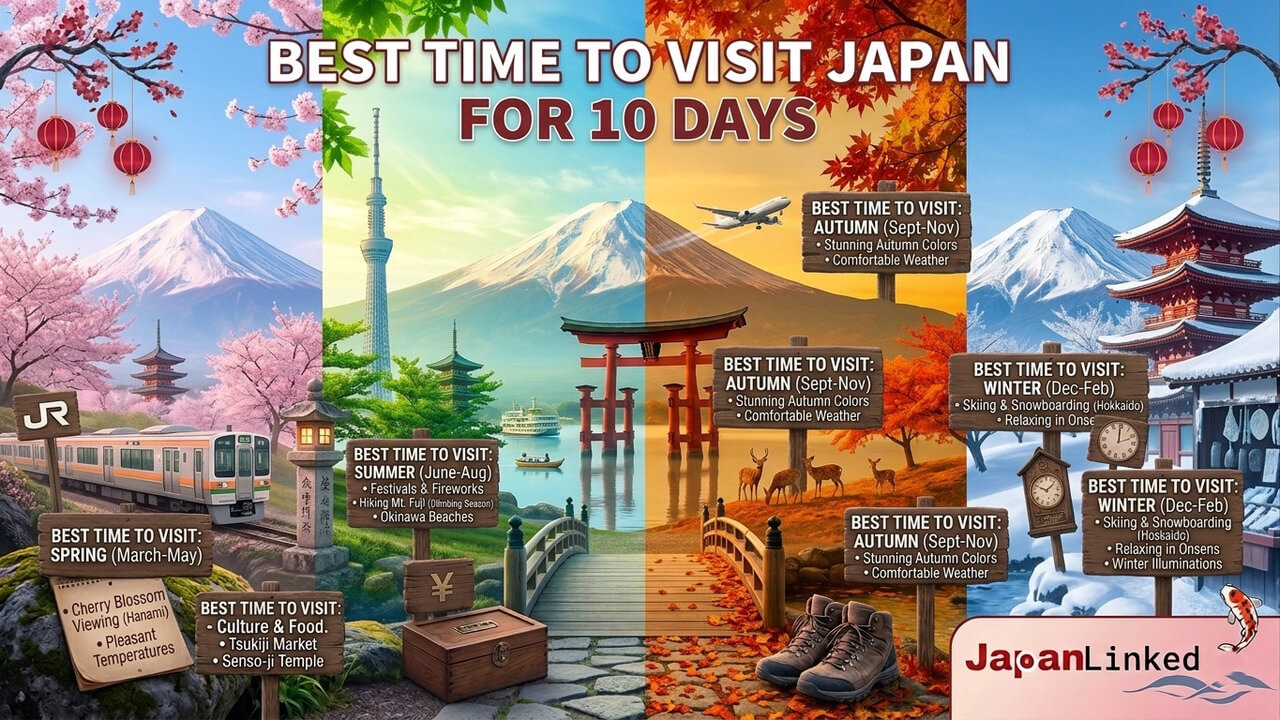
| Spring (late Mar–Apr) | Cherry blossoms, perfect temperatures | Book everything 4–6 months ahead; prices spike 30–50% |
| Autumn (Oct–Nov) | Vivid foliage, comfortable weather | Popular but manageable; book 6–8 weeks ahead |
| Winter (Dec–Feb) | Fewest crowds, lowest prices, mountain snow | Cold; Hakone and rural areas especially so |
| Summer (Jun–Aug) | Festivals, full access everywhere | Hot and very humid; June is rainy season |
Autumn is the ideal season for a first 10-day trip. October through mid-November brings fiery red and gold foliage to every temple garden in Kyoto, crisp weather perfect for walking between sites, and meaningfully fewer crowds than cherry blossom season.
Spring is spectacular but requires months of advance planning for accommodation and popular attractions.
Avoid Golden Week (late April–early May) and Obon (mid-August) without exception — trains and temples become overwhelmed with domestic travelers, prices spike, and popular Shinkansen routes can sell out.
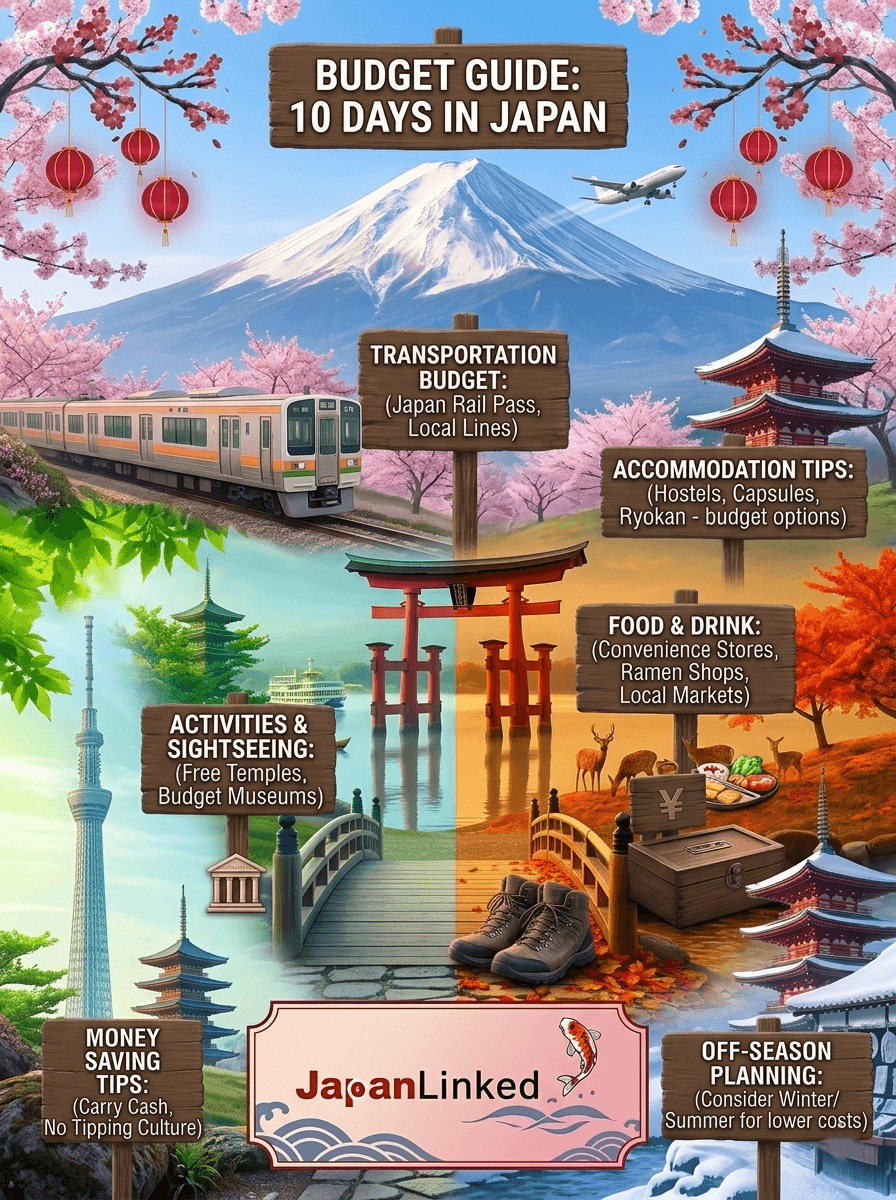
Budget Guide: 10 Days in Japan
| Category | Budget (USD) |
|---|---|
| International flights (round-trip) | $600–1,400 |
| Accommodation (10 nights, mid-range) | $700–1,400 |
| 7-day JR Pass | ~$330 |
| Local transport (IC card top-ups, subways) | ~$80 |
| Food (10 days, mid-range) | $350–600 |
| Activities and entrance fees | $120–250 |
| Total mid-range estimate | $2,200–4,000 |
Budget travelers staying in hostels and capsule hotels (and eating heavily from convenience stores) can bring this closer to $1,500. Ryokan nights, kaiseki dinners, and private experiences push it higher — but these are among the best splurges available anywhere in the world.
Conclusion
Ten days in Japan is the first itinerary length that truly delivers on the country’s promise. Long enough to not rush. Short enough to stay focused.
With the right route, you leave having experienced Tokyo’s dizzying energy, a mountain onsen at the foot of Mount Fuji, Kyoto’s ancient temples at dawn, the weight of Hiroshima’s history, and Osaka’s completely unself-conscious joy in food.
Most first-timers come back. They come back because 10 days is enough to fall completely in love with Japan — but not nearly enough to feel finished with it. That’s exactly as it should be.
Wake up early, eat everything, and let the bullet train do the rest.
