
The Japan most visitors experience is a greatest-hits album. Tokyo, Kyoto, Osaka – three extraordinary cities, a bullet train between them, done.
It’s a brilliant trip. But it’s also a trip through the curated surface of a country whose real depth lives somewhere else entirely.
Japan’s countryside is where the country gets quiet, strange, and genuinely itself. It’s where rice farmers still work terraced paddies that have been cut into the same hillsides for a thousand years.
Where a tiny island in the Seto Inland Sea has somehow become home to one of the world’s most important contemporary art collections.
Where pilgrimage trails through ancient cedar forest have been walked continuously since the 10th century, and where vine-rope suspension bridges swing over deep mountain gorges in valleys that tourists don’t reach until the second or third visit.
This Japan countryside itinerary is designed for travelers ready to look beyond the Golden Route – and for first-timers who want something other than the obvious.
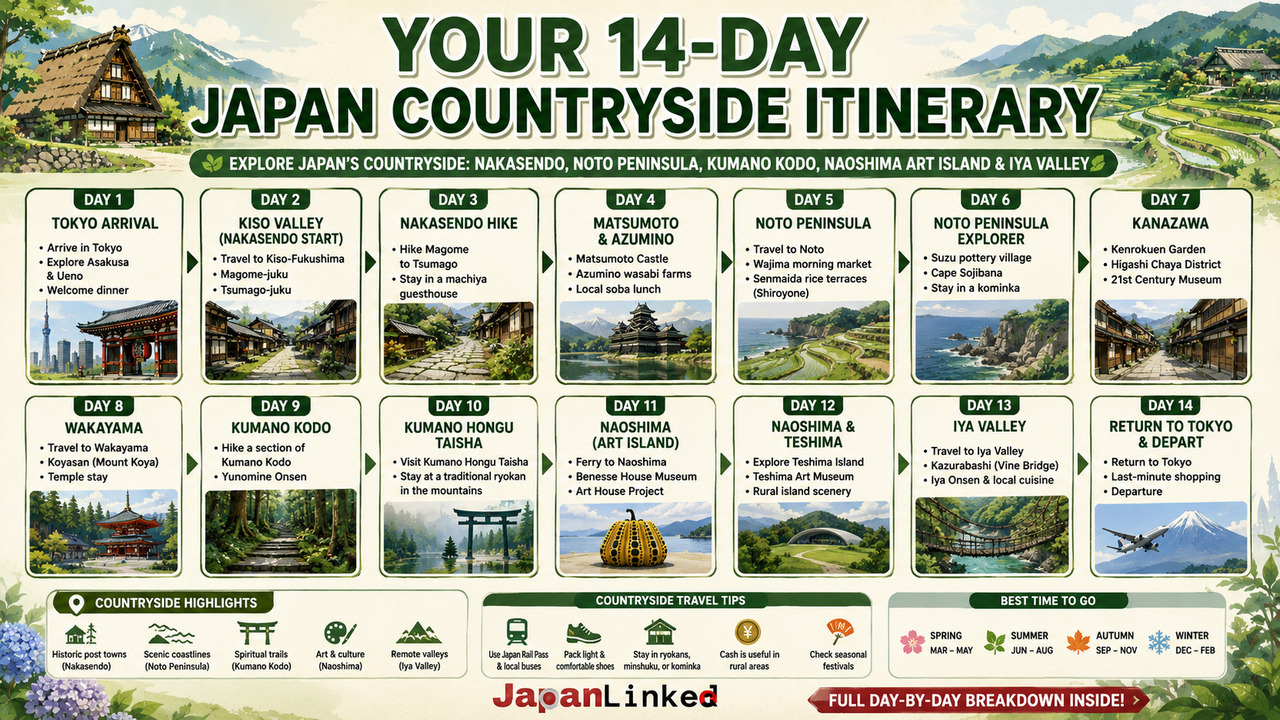
It maps 14 days across five distinct rural landscapes, each with its own character, its own food, and its own reason to make the detour.
A car is useful but not always necessary. Patience is essential. And the rewards, consistently, are extraordinary.
Why Japan’s Countryside Rewards the Effort
Rural Japan operates on a different register from its cities – and that contrast is precisely the point.
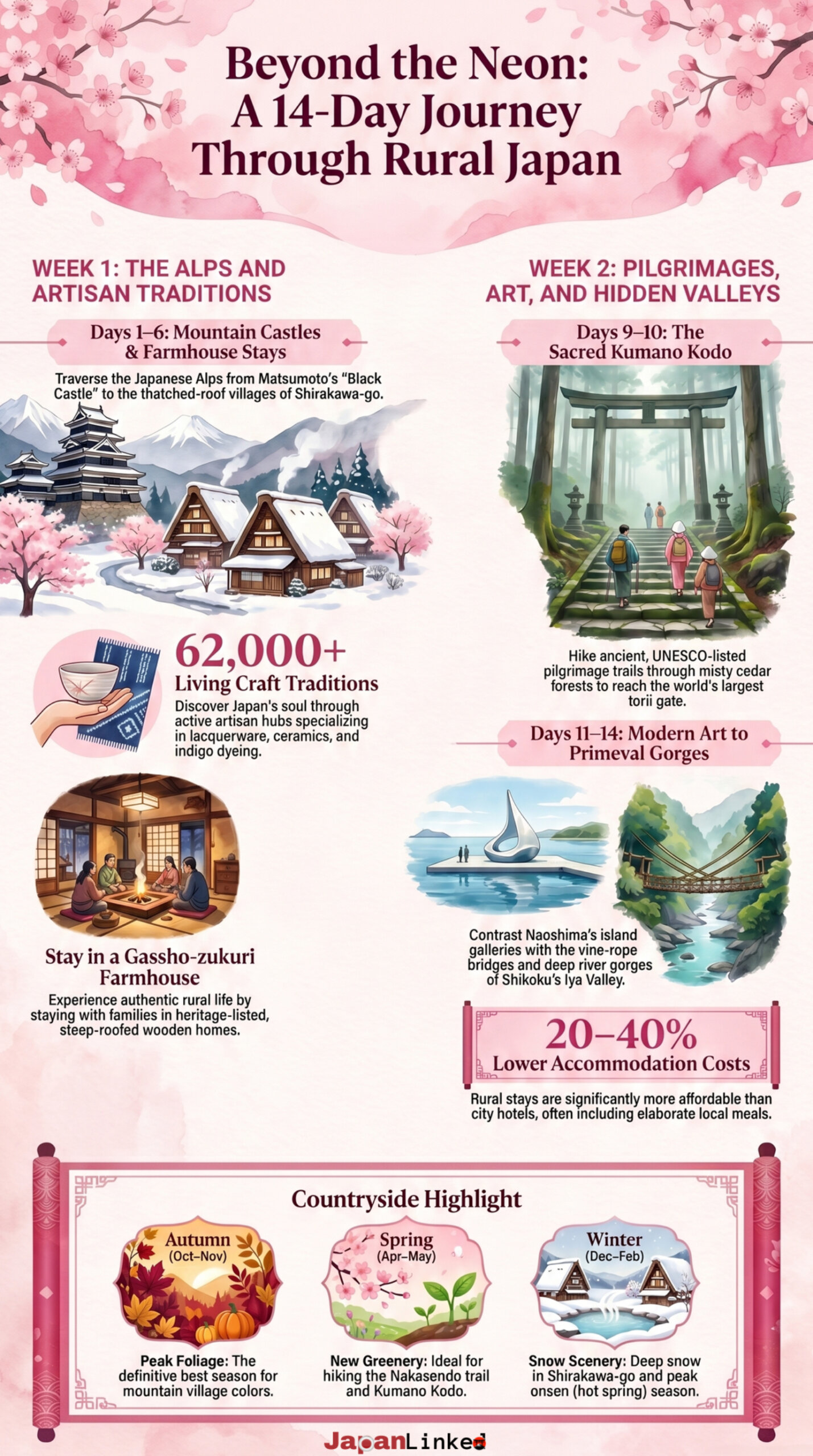
Japan’s countryside is home to over 62,000 traditional craft traditions still practiced by living artisans: lacquerware in Aizu, ceramic in Tobe, indigo dyeing in Tokushima, washi paper in Echizen.
It contains landscapes – the terraced rice paddies of Shiroyone Senmaida, the gorges of Iya Valley, the sacred forest trails of the Kumano Kodo – that have no equivalent in urban Japan.
And it offers accommodation experiences that the cities can’t replicate: minshuku farmhouse guesthouses where the family cooks dinner from their own garden, ancient ryokan where the building itself is a heritage artifact.
The practical challenges are real: rural buses run infrequently, English signage thins out, and some of the best places require a rental car or a willingness to time transport carefully.
But these are manageable with planning – and the experience on the other side is Japan at its most unmediated.
Who this itinerary is for: Second-time Japan visitors who’ve done Tokyo–Kyoto–Osaka and want to go deeper. First-time visitors who’ve consumed enough Japan content to skip the obvious highlights and head straight for the substance. Anyone willing to move more slowly for a richer experience.
Also Read: Japan Honeymoon Itinerary & Northern Japan Itinerary
The Japan Countryside Itinerary: 14 Days
The Route at a Glance
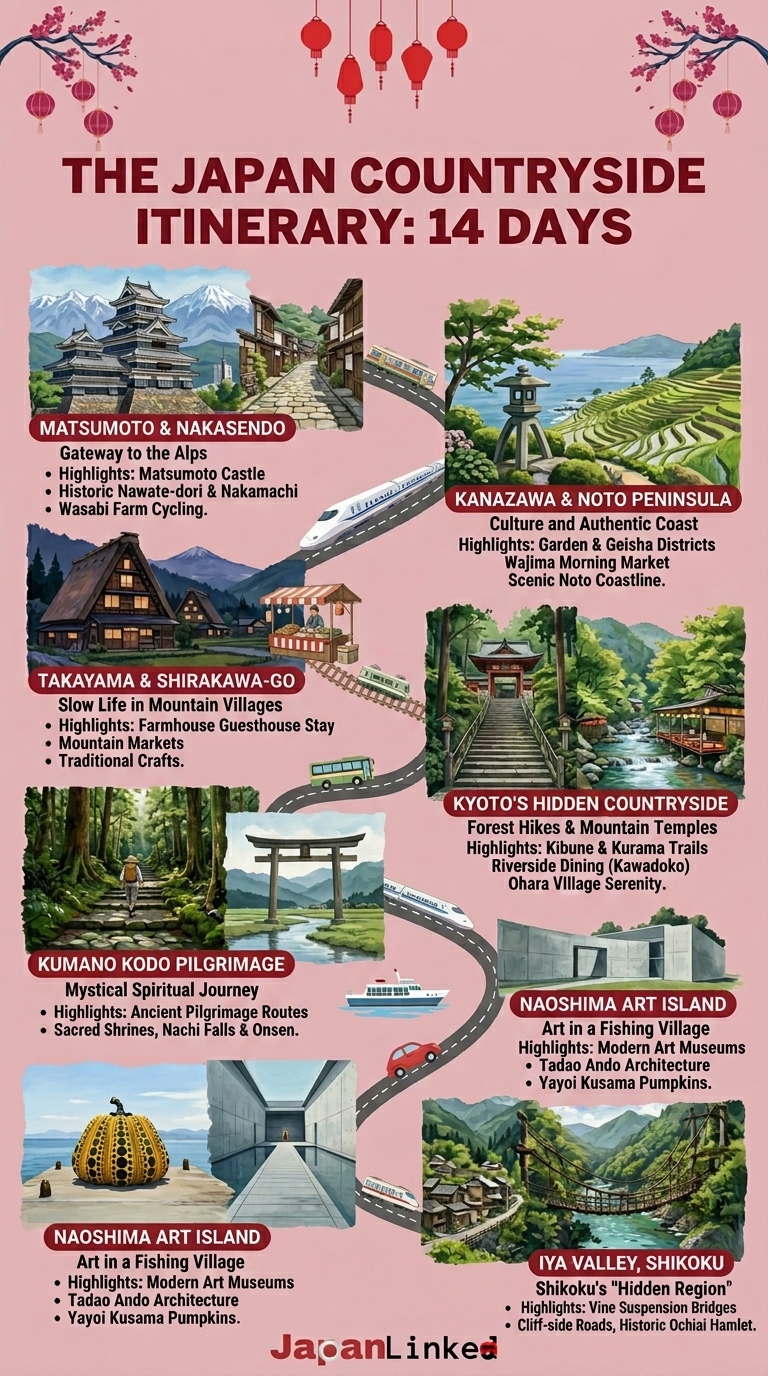
This itinerary flows roughly east to west across the country’s main island, then dips south to the Kii Peninsula before looping back through the Seto Inland Sea and into Shikoku’s hidden valleys.
Overview:
- Days 1–2: Matsumoto & the Nakasendo (Japanese Alps gateway)
- Days 3–4: Kanazawa + Noto Peninsula
- Days 5–6: Takayama + Shirakawa-go
- Days 7–8: Kyoto Countryside (Kibune, Ohara, Kurama)
- Days 9–10: Kumano Kodo Pilgrimage, Kii Peninsula
- Days 11–12: Naoshima Art Island, Seto Inland Sea
- Days 13–14: Iya Valley, Shikoku
Transport strategy: A combination of JR Shinkansen for long legs, regional limited express trains, local buses, and a rental car for Days 9–10 (Kumano Kodo area) and Days 13–14 (Iya Valley) where public transport is limited. The JR Central Takayama-Hokuriku Area Tourist Pass (¥14,260 for 5 days) covers Days 3–6 efficiently. Individual Shinkansen tickets handle the rest.
Days 1–2: Matsumoto & the Nakasendo (2 nights)
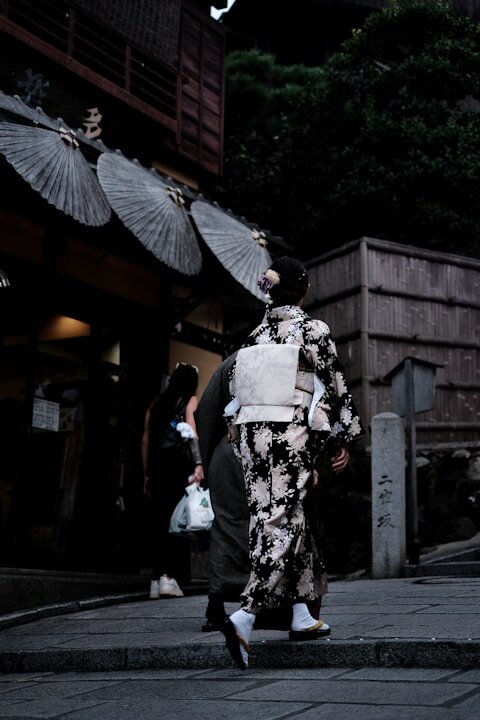
How to get there: Azusa Limited Express from Shinjuku, approximately 2.5 hours (¥6,690)
Matsumoto is the ideal countryside entry point – a city small enough to walk across in an afternoon, anchored by one of Japan’s finest original castles, and surrounded by the Japanese Alps on three sides. It lacks the tourist infrastructure of Kyoto but has all the substance.
- Matsumoto sits in Nagano Prefecture, where a new flat ¥200 per person per night accommodation tax applies from June 2026 – a minor addition worth factoring into your budget
- Matsumoto Castle – one of Japan’s five national treasure castles, a 16th-century black-lacquered fortress rising against the backdrop of the Northern Alps. Arrive at opening (8:30 AM) to climb the steep interior stairs without queuing
- Nawate-dori and Nakamachi streets – Matsumoto’s two best preserved historic streets: one a riverside row of craft shops and frog-themed stalls, the other a series of converted merchant warehouses (kura) now housing cafés, galleries, and sake shops
- Hotaka and Daio Wasabi Farm (30 min by train) – the largest wasabi farm in Japan, with terraced beds fed by clear Alpine spring water and ranked among Japan’s most picturesque rural landscapes. Cycle the paths between the fields in morning mist
The Nakasendo Walk
The Nakasendo was one of Japan’s two great Edo-period mountain highways connecting Tokyo and Kyoto.
Between Magome and Tsumago – two post towns in Nagano Prefecture, 8 km apart – a well-preserved section of the original trail still runs through forested mountain countryside, connecting two perfectly intact post-town villages.
The Magome–Tsumago walk (2–3 hours, 8 km, gently undulating) is one of the most satisfying day hikes in Japan:
- Stone-paved path through cedar forest, past waterfalls and rest-house ruins
- Tsumago at the far end: an entire village preserved by law since 1968 – no electrical poles, no modern signage, no cars on the main street. The wooden inns and shops look exactly as they did in the 1800s
- Magome at the start: slightly less pristine but with excellent food stalls and a dramatic hillside position
- A luggage forwarding service (¥1,000 per bag) sends your bags from Magome to Tsumago while you walk unencumbered
Access from Matsumoto: JR to Nagoya, then JR Chuo Line to Nagiso (for Tsumago) or Nakatsugawa (for Magome). Allow a full day.
Days 3–4: Kanazawa + Noto Peninsula (2 nights)
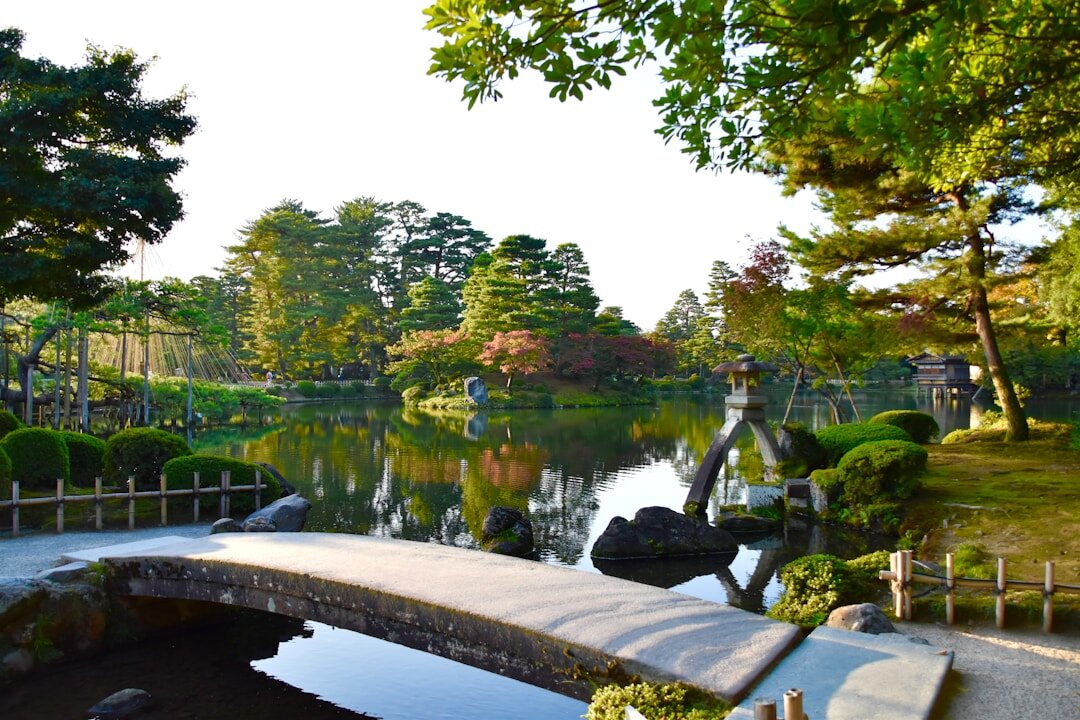
How to get there: Hokuriku Shinkansen from Nagano to Kanazawa, approximately 1 hour (¥9,130)
Kanazawa is covered in depth in the 12-day itinerary in this series – Kenroku-en Garden, Higashi Chaya geisha district, Kanazawa Castle, the 21st Century Museum.
Here, the focus shifts to what lies beyond the city: the Noto Peninsula, a narrow finger of land extending into the Japan Sea that is one of the country’s most authentically rural coastlines.
Noto Peninsula (Day trip or overnight from Kanazawa)
The Noto Peninsula sustained significant damage from the January 2024 earthquake but has been steadily reopening.
By 2026, most major visitor sites are accessible, and visiting supports the local recovery effort. Check current conditions at the Ishikawa Prefecture tourism website before going.
- Wajima morning market (asaichi) – one of Japan’s three great morning markets, operating for over 1,000 years. Local fisherwomen and farmers sell preserved seafood, wild vegetables, lacquerware, and dried goods along a 360-meter outdoor market street. Arrive by 7 AM for the full experience
- Wajima lacquerware (Wajima-nuri) – the peninsula’s most celebrated craft tradition, producing some of Japan’s finest lacquer objects through a 124-step process. The Wajima Lacquerware Museum traces the entire technique
- Shiroyone Senmaida rice terraces – 1,004 small rice paddies carved into a steep coastal hillside descending to the Japan Sea. One of Japan’s officially designated “most beautiful landscapes.” At dusk, when the terraces reflect the setting sun, the visual is extraordinary
- Kiriko lantern floats – if visiting July–October, the Noto Peninsula’s kiriko matsuri festival season brings enormous cedar lantern floats, some over 15 meters tall, through villages at night. Specific dates vary by village; check the Noto tourism calendar
Also Read: 10 Days Winter Japan Itinerary & 10 Days In Summer Japan In Itinerary
Days 5–6: Takayama + Shirakawa-go (2 nights in Takayama)
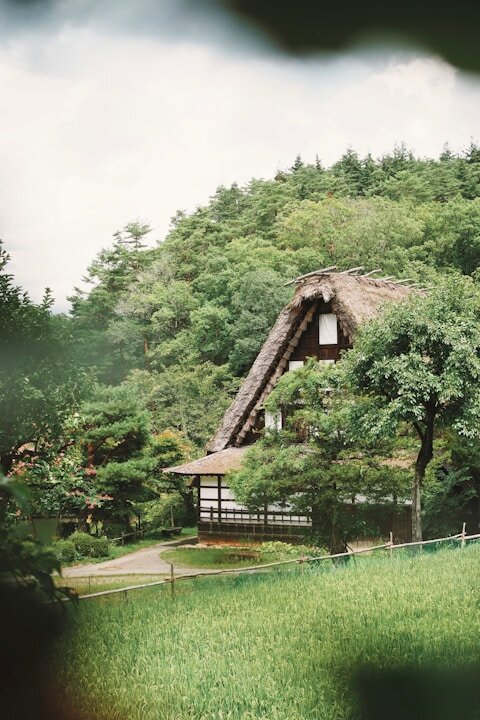
How to get there: Bus from Kanazawa via Shirakawa-go to Takayama, approximately 2 hours total. Reserve Nohi Bus seats in advance – this route fills up.
The Takayama and Shirakawa-go section is covered in detail in the 12-day and 3-week itineraries. In a countryside-focused trip, the emphasis is different: less on the town-as-attraction and more on slowing down and staying.
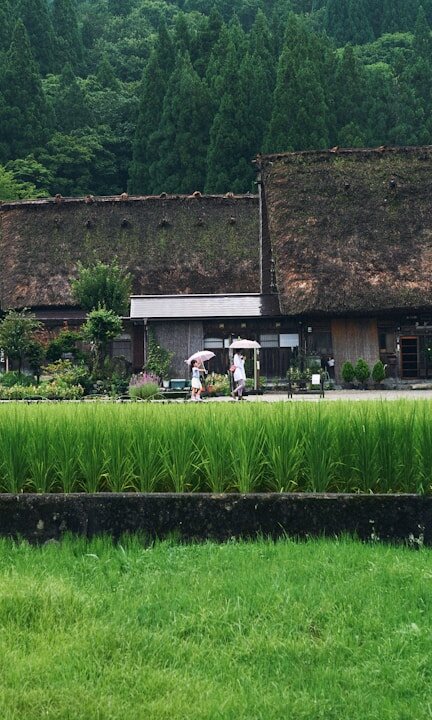
- Choose a farmhouse guesthouse (minshuku) in or near Shirakawa-go for one night – staying inside a working gassho-zukuri farmhouse with a family who has lived in the building for generations is a fundamentally different experience from a hotel
- Walk the Ogimachi observation deck path at dusk rather than at peak noon hour – the village lit by afternoon light against mountain shadow is the best version of the scene
- In Takayama, visit the Hida Folk Village (Hida no Sato) in late afternoon when the day-tripper buses have gone – 30 traditional buildings across a forested hillside, almost empty after 3:30 PM
- Morning market on the Miyagawa Riverbank at 6:30 AM – local produce, hand-pickled vegetables, cedar incense, and elderly vendors who have been coming to this same spot for decades
Countryside tip: Book meals included when staying in rural ryokan and minshuku. Japan doesn’t have a strong breakfast-out culture, and in rural towns, restaurants may be limited or close early. In-house dinner and breakfast is the practical and enjoyable choice.
Days 7–8: Kyoto’s Hidden Countryside (2 nights in Kyoto)
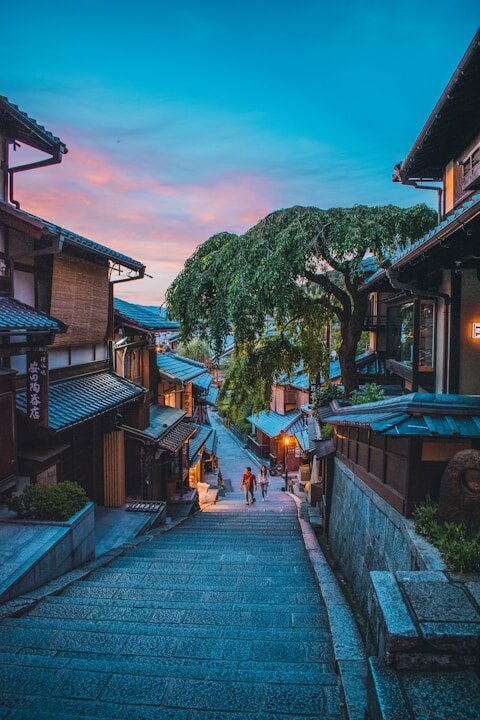
How to get there: JR Hida Limited Express from Takayama to Nagoya, then Shinkansen to Kyoto. About 3.5 hours total.
Most visitors to Kyoto stay in the city center. But within 30–45 minutes of Kyoto Station, the city dissolves into mountain villages, cedar forest, and river gorges that feel completely removed from the tourist circuit below. Days 7 and 8 are for the Kyoto almost no one sees.
Kibune and Kurama (Day 7)
A single mountain valley north of Kyoto contains two of the region’s most atmospheric destinations, connected by a forested hiking trail.
- Kurama – a small mountain village built around Kuramadera Temple, whose approach climbs through ancient cedar forest on stone steps. The temple complex at the top sits 570m above the valley; the walk up takes about 45 minutes and passes through scenery that has no equivalent in Kyoto proper
- Kibune – connected to Kurama via a 2 km mountain trail (1 hour). The trail passes through old-growth forest before descending into a river gorge where a string of traditional restaurants extend platforms (kawadoko) over the Kibune River for summer dining – one of the most atmospheric lunch settings in the Kyoto area (reservations required May–September)
- The trail between Kurama and Kibune is Japan at its most Miyazaki-esque: moss, cedar roots, stone lanterns, mist
Ohara (Day 8)
An hour northeast of Kyoto by bus, Ohara is a farming village in a mountain basin that has been absorbing Buddhist monks, nuns, and travelers since the Heian period.
- Sanzen-in Temple – a vast temple garden complex with ancient cryptomeria trees, carpet-thick moss, and stone Buddha figures half-hidden among the roots. One of the most serene places in the Kyoto region
- Hosenin Temple – a smaller temple with a 700-year-old pine tree framed by the open veranda like a living painting. The bamboo grove at the back is quieter than Arashiyama and requires no dawn alarm
- Jakko-in Temple – associated with one of Japan’s most poignant stories: the empress Kenreimonin, who survived the battle that destroyed her entire clan in 1185, lived out her remaining decades here as a nun. The small complex in the forest carries that history quietly
The valley around Ohara grows shiso (perilla) and vegetables sold in roadside farm stands along the approach roads – one of those quietly lovely rural Japan details that appear nowhere in guidebooks.
Also Read: 2 Week Japan Itinerary & 3 Week Japan Itinerary
Days 9–10: Kumano Kodo Pilgrimage, Kii Peninsula (2 nights)
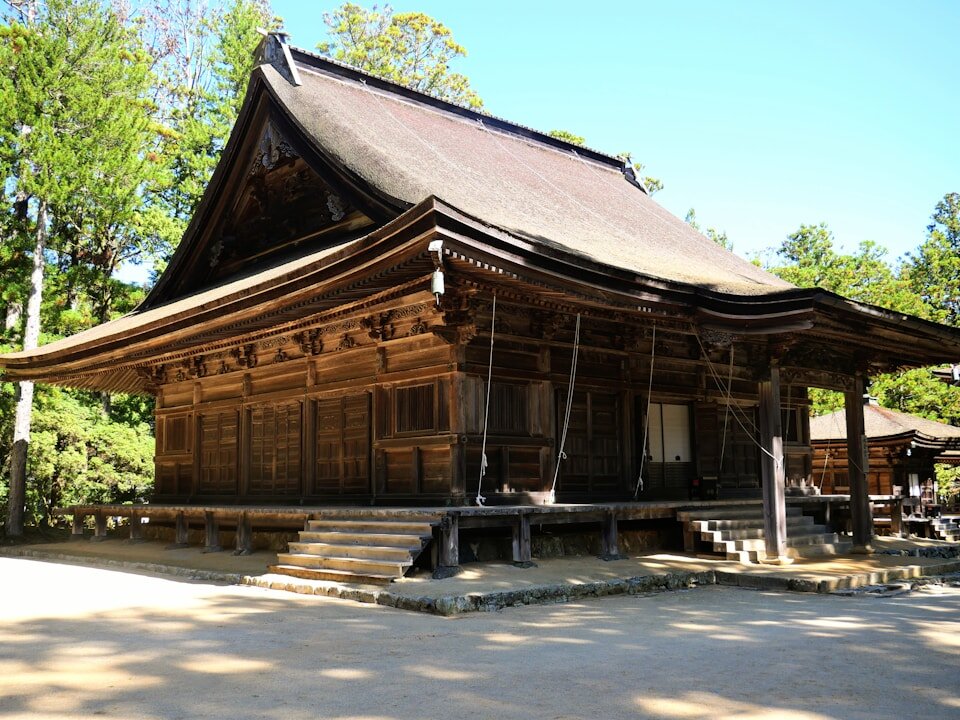
How to get there: Shinkansen from Kyoto to Shin-Osaka, then JR Kuroshio Limited Express to Shingu or Kii-Tanabe. About 3–3.5 hours total.
Rent a car in Kii-Tanabe or Shingu. The Kumano Kodo trail network and the Kii Peninsula’s sacred sites are accessible by public transport but a car opens the region significantly.
The Kumano Kodo is a network of ancient pilgrimage routes through the Kii Mountains – one of Japan’s most sacred pilgrimage trails, offering a mystical spiritual journey through sacred sites, beautiful forests, and traditional teahouses. Designated a UNESCO World Heritage Site in 2004, it shares that distinction with the Camino de Santiago in Spain – one of only two pilgrimage routes in the world to hold the status. Unlike the Camino, it remains genuinely quiet.
The Nakahechi Route (2 Days Walking)
The Nakahechi is the most accessible section for a 2-day introduction:
- Day 9: Walk the Takijiri-oji to Chikatsuyu-oji section (15 km, about 5–6 hours). The path climbs through dense cryptomeria forest past ancient stone pilgrim markers (oji shrines), rice paddies in mountain clearings, and small farmhouses. Stay overnight in a minshuku in Chikatsuyu village – several family-run guesthouses cater specifically to pilgrims, serving elaborate dinners of mountain vegetables, river fish, and local sake
- Day 10: Continue to Hongu Taisha – the spiritual heart of the Kumano Kodo. The Grand Shrine complex at Hongu, rebuilt after a flood in 1889 but operating continuously since the 9th century, is approached through a cedar-forested path. The original shrine site (Oyunohara) is now an open riverside field containing the world’s largest torii gate – 34 meters tall, vermillion, standing alone in the flood plain beside the Kumano River
Also worth visiting on Day 10:
- Nachi Falls – Japan’s tallest waterfall (133 metres) beside the bright orange Kumano Nachi Taisha shrine. The combination of falls, pagoda, and forest is one of the Kii Peninsula’s defining images
- Yunomine Onsen – Japan’s oldest onsen, operating continuously for over 1,800 years. The small village of about 30 buildings is built around a hot spring that emerges from the earth at over 90°C. Visitors have cooked eggs and vegetables in the spring for centuries. One public bath (tsuboyu), a UNESCO-listed structure, sits in the middle of the river
Cash is essential on rural stretches. Bring ¥100 coins for trailhead toilets (Mt. Fuji toilets charge ¥200–300 on the honor system), and assume card acceptance will be limited in mountain villages.
Days 11–12: Naoshima Art Island, Seto Inland Sea (2 nights)
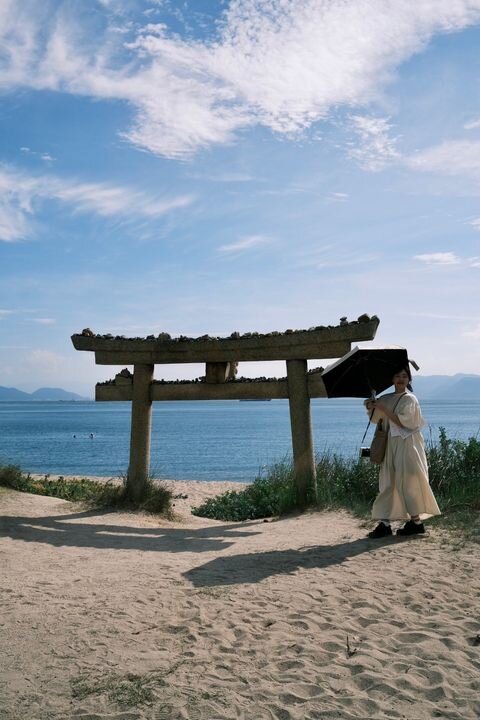
How to get there: JR from Shingu to Shin-Osaka, then Shinkansen to Okayama (~45 min), then JR Uno Line to Uno Station (~1 hour), then ferry to Naoshima (~20 min). Total approximately 5–6 hours.
Naoshima is a small island in the Seto Inland Sea, home to an extraordinary collection of modern art.
When Benesse House opened in 1992 with the theme of “coexistence of nature, architecture and art,” it transformed what had been a declining fishing island into one of the world’s most important contemporary art destinations.
The island is home to the Chichu Art Museum, Benesse House Museum, Lee Ufan Museum, Valley Gallery, Hiroshi Sugimoto Gallery: Time Corridors, and the Naoshima New Museum of Art (opened May 2025). It is known for Yayoi Kusama’s pumpkin sculptures and Tadao Ando architecture.
The combination of contemporary art, Tadao Ando’s buried concrete architecture, and an 8 sq km island that still operates as a working fishing community is unlike anything else in Japan – or anywhere else in the world.
Getting Around Naoshima
Transport options from Miyanoura Port include the town shuttle bus (¥100 per ride, covering all major sites), the free Benesse shuttle between the Benesse-area museums (Chichu, Lee Ufan, Sugimoto Gallery, Valley Gallery, and Benesse House), or a rental bicycle (¥500–2,000 per day, with electric-assist bikes available.
The bicycle is the recommended option – the island is small enough to cover in a day and the coast road between museums is genuinely beautiful.
Key Sites
- Chichu Art Museum – partially buried underground to preserve the island’s landscape, designed by Tadao Ando. Houses works by Claude Monet, Walter De Maria, and James Turrell in rooms designed specifically for each work. The Monet room, lit entirely by natural light that shifts through the day, contains five late Water Lilies paintings. Reservations open six months in advance and must be made online; spring and autumn peak rooms sell out within minutes of release. Book ahead
- Benesse House Museum – the art hotel and museum integrated with the island’s landscape. Works by Jasper Johns, Richard Long, and Cy Twombly in rooms that blur the line between gallery and accommodation
- Art House Project – abandoned houses on Naoshima transformed into works of art since 1998, shaped by Japanese tradition and aesthetics and weaving in the history of the houses themselves. The Honmura village houses (seven buildings) are the most concentrated collection
- Yayoi Kusama’s Pumpkins – the yellow and red polka-dot pumpkin sculptures on the pier are Naoshima’s most photographed works. The yellow pumpkin was swept into the sea by a typhoon in 2021 and restored; it now stands behind a protective barrier
- I♥湯 (I Love Yu) public bath – artist Shinro Ohtake transformed a working sento into an installation artwork. You can actually bathe here for ¥660. It’s one of Japan’s most genuinely surprising art experiences
Days 13–14: Iya Valley, Shikoku (2 nights)
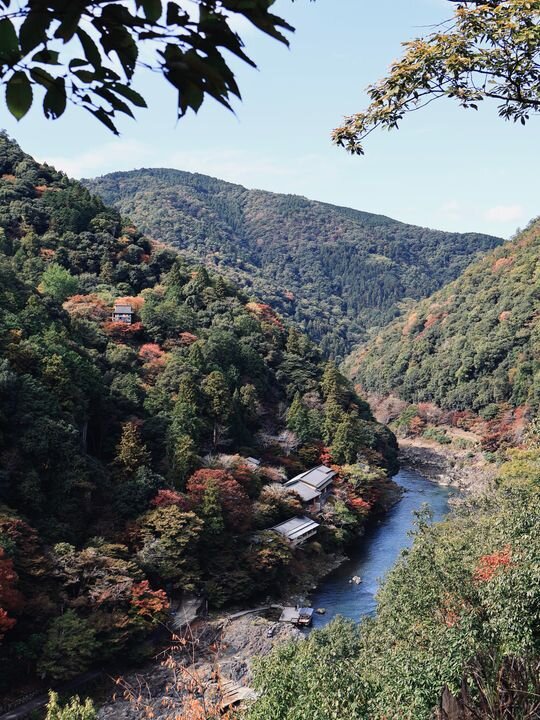
How to get there: Ferry from Naoshima to Takamatsu (1 hour), then JR and bus to Iya Valley (approximately 2 hours). A rental car from Takamatsu is strongly recommended – Iya Valley’s best experiences require road access.
Shikoku’s Iya Valley is one of the three “hidden regions” of Japan – a green expanse of river gorges and lush mountains, cut off from civilisation by near-impossible terrain.
It was a refuge for the defeated Heike clan after the 12th-century Genpei War, for mountain ascetics practicing esoteric Buddhism, and for those simply trying to disappear from the world.
The landscape explains why: gorges drop hundreds of metres, roads cling to cliff edges, and the valley floor sees limited sunlight even at midday.
Kazura Bridge
The Iya Kazura Bridge is a suspension bridge of wisteria vine (kazura) stretched across the Iya River, originally built as the only river crossing for communities cut off by the gorge.
The current bridge is rebuilt on a three-year cycle using traditional techniques – the vine mesh underfoot allows you to see the river below through the gaps.
Walking it gets your adrenaline going and offers dramatic valley views. ¥550 to cross; open daily.
What Else to See
- Oboke and Koboke gorges – the Yoshino River has carved dramatic marble walls through the valley. Glass-bottom boat tours (¥1,500, 30 minutes) run through the most spectacular section of Koboke Gorge
- Ochiai Hamlet – a traditional hamlet in Iya Valley, one of Japan’s most authentic rural communities, where stone-walled terraced houses cling to a steep mountainside. The hamlet has been inhabited continuously since the Heian period. Walking its narrow stone lanes in the early morning, with mountain mist filling the valley below, is one of the most quietly extraordinary experiences available in Japan
- Shikoku Mura (near Takamatsu, Day 14 en route) – an open-air museum of traditional Shikoku architecture, including vine bridges, farmhouses, a Kabuki stage, and a sugarhouse from the Edo period. A satisfying cultural conclusion before heading to the airport
Fly home from Takamatsu Airport (connected to Tokyo Haneda) or return to Osaka’s Kansai International by ferry from Takamatsu (4.5 hours, overnight option available).
Also Read: 11 Days In Japan Itinerary & 10 Days In Japan Itinerary
Essential Countryside Japan Tips
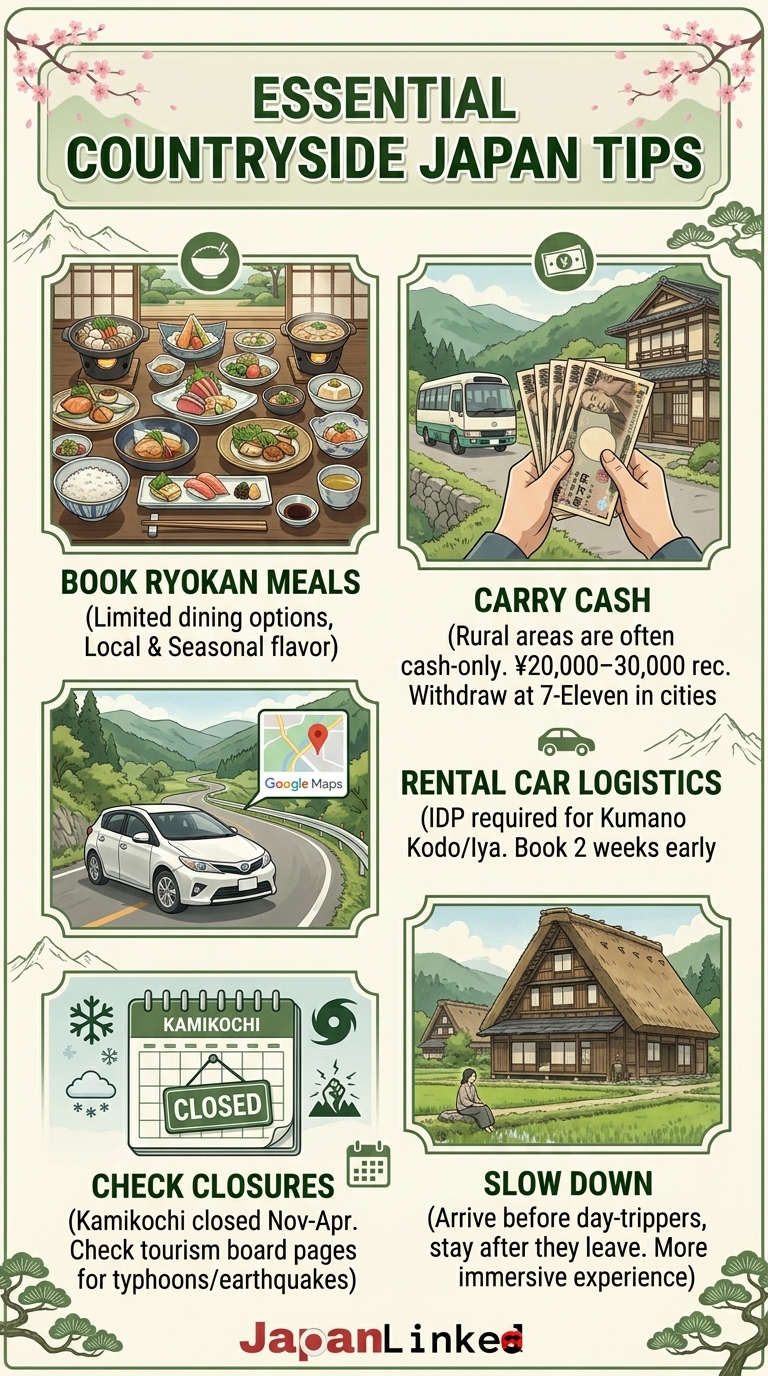
Always book accommodation meals included. Rural towns frequently have limited restaurant options and early closing times.
A ryokan or minshuku dinner included in your rate is both the convenient and the superior choice – the food will typically be local, seasonal, and far better than anything available nearby.
Carry cash at all times in rural Japan. More off-the-beaten-path places are still cash-only – rural ryokan, mountain huts, and small bus operators often don’t accept cards.
Withdraw at 7-Eleven ATMs before leaving major cities and carry at least ¥20,000–30,000 in rural areas.
Check seasonal closures before you go. Kamikochi closes mid-November to mid-April. Some Kumano Kodo trail sections are affected by typhoon damage during summer. Noto Peninsula sites may have additional restrictions post-earthquake. The relevant tourism boards maintain English-language condition pages.
Rental car logistics matter. For the Kumano Kodo and Iya Valley sections, an international driving license from your home country plus your national license is required. Book cars through Nippon Rent-A-Car or Toyota Rent-A-Car at least 2 weeks ahead in peak season. Navigation apps work well in Japan; all use Google Maps with Japanese address input.
Slow down deliberately. The cities reward speed – more to see, more to do. The countryside rewards the opposite. The best experiences in Ohara, Shirakawa-go, and the Iya Valley happen when you arrive before the day-trippers and stay after they leave.
Also Read: 1 Week In Japan Itinerary & 12 Days In Japan Itinerary
Best Season for a Japan Countryside Itinerary
| Season | Countryside Highlights | Watch Out For |
|---|---|---|
| Spring (Apr–May) | Nakasendo in new leaf; Wajima market in warm air; Kumano Kodo at its greenest | Book accommodation 2–3 months ahead; Golden Week (late Apr–early May) is extremely busy |
| Autumn (Oct–Nov) | Foliage peaks in mountain villages; Ohara maples; Iya Valley in deep color | Best overall season; most comfortable walking weather |
| Summer (Jun–Aug) | Kibune kawadoko river dining; Noto Peninsula kiriko festivals; lush mountain green | Heat and humidity in lowland areas; Kumano trails are hot; mountain regions more comfortable |
| Winter (Dec–Feb) | Shirakawa-go in deep snow; Nakasendo post towns quietly beautiful; onsen season | Some mountain roads close; bus schedules reduce; Shirakawa-go illumination events in Jan–Feb |
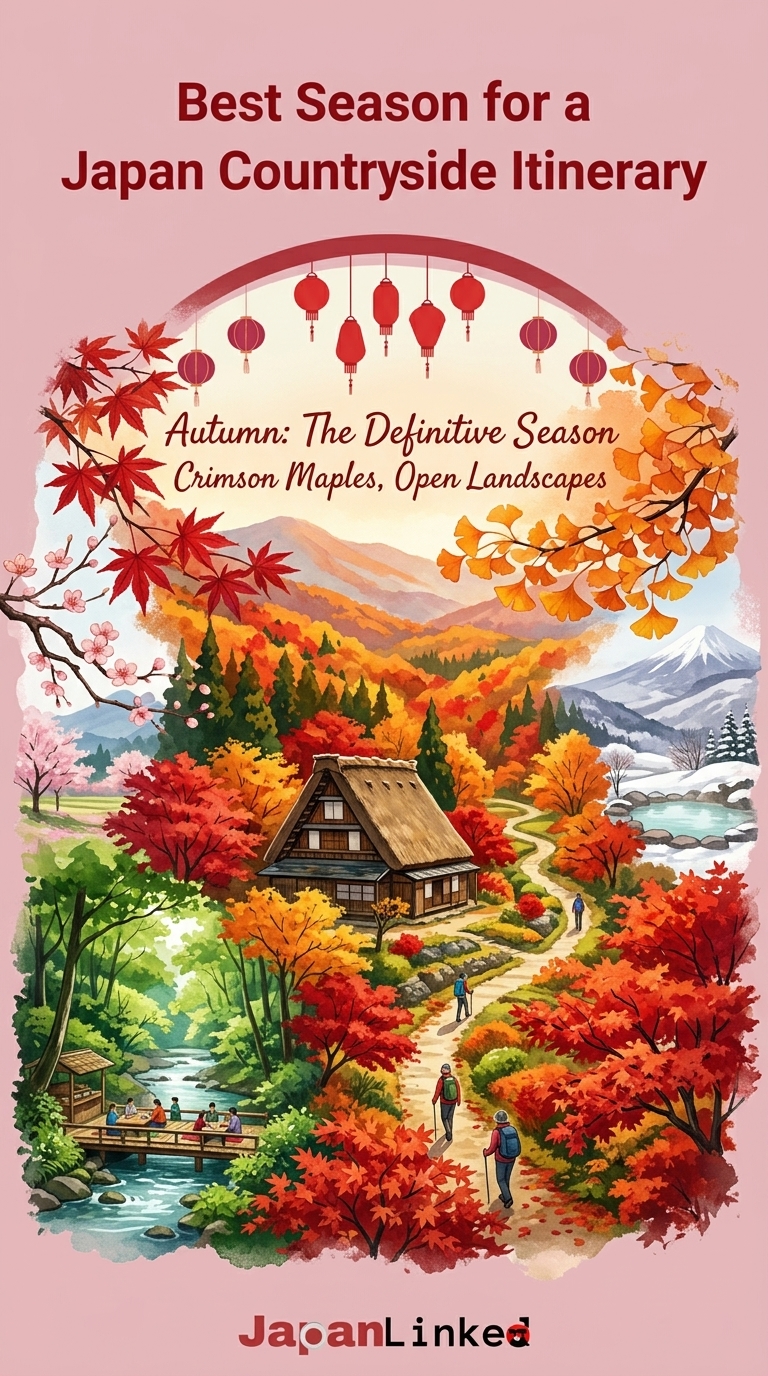
Autumn is the definitive season for a Japan countryside trip. October through mid-November brings the foliage peak to mountain villages in a way that cities experience too – but in the countryside, with fewer people and more open landscape, it’s something else.
The Iya Valley in autumn foliage, the Ohara temple gardens in crimson maple, and the Nakasendo trail through turning leaves are among the finest seasonal landscapes Japan offers.
Budget Guide: 14-Day Japan Countryside Trip
| Category | Budget (USD) |
|---|---|
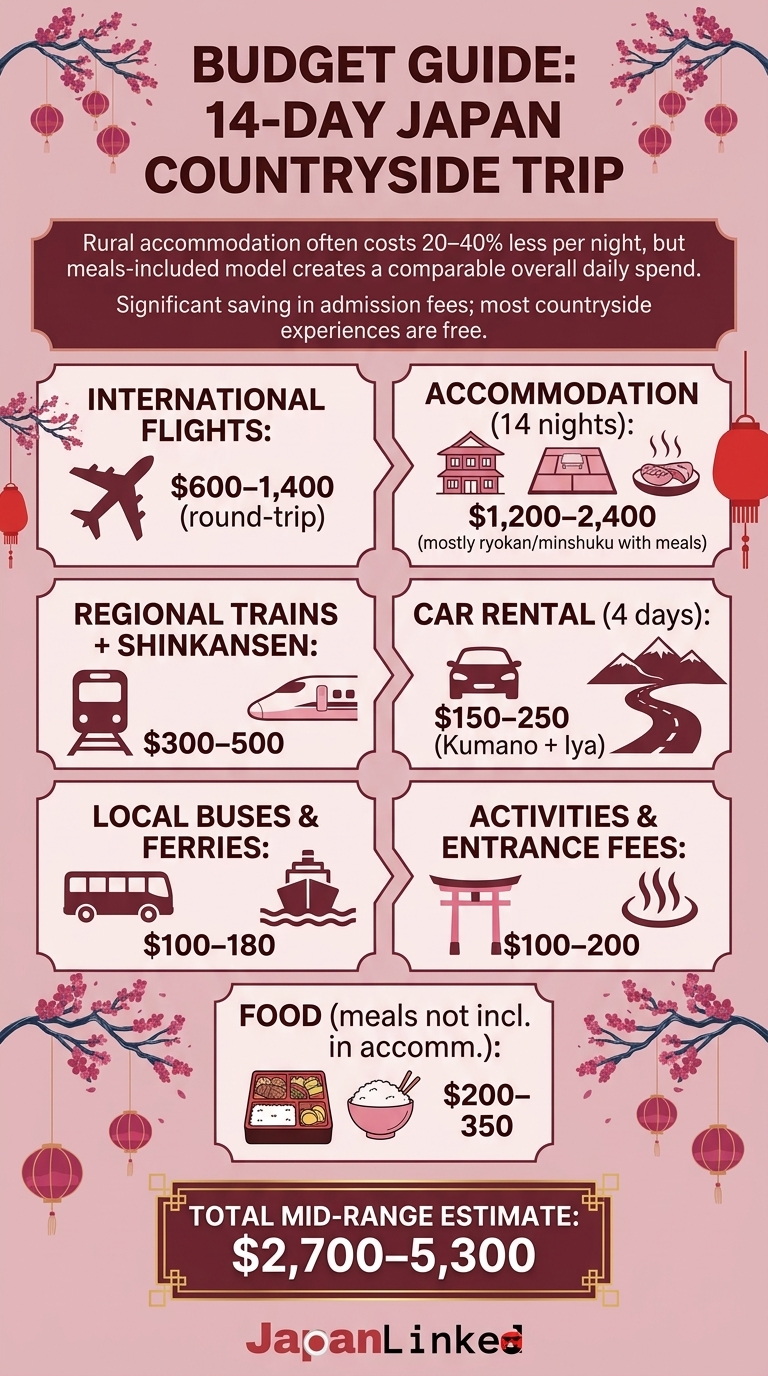
| International flights (round-trip) | $600–1,400 |
| Accommodation (14 nights, mostly ryokan/minshuku with meals) | $1,200–2,400 |
| Regional trains + Shinkansen | $300–500 |
| Car rental (4 days, Kumano + Iya) | $150–250 |
| Local buses and ferries | $100–180 |
| Activities and entrance fees | $100–200 |
| Food (meals not included in accommodation) | $200–350 |
| Total mid-range estimate | $2,700–5,300 |
Rural Japan accommodation typically costs 20–40% less per night than comparable quality in Kyoto or Tokyo, but the meals-included model means your overall daily spend is often comparable.
The significant saving is in admission fees and optional extras – most countryside experiences (hiking trails, morning markets, village walks) are free.
Conclusion
Japan’s countryside doesn’t announce itself. There are no Shibuya Crossings broadcasting its appeal, no viral photographs generating queues before dawn.
It just exists – quietly, stubbornly, beautifully – in the spaces between the cities that most visitors race through.
The Nakasendo trail between Magome and Tsumago looks like a woodblock print. The Chichu Art Museum on Naoshima makes you genuinely reconsider what a building can be.
The Kumano Kodo through ancient cedar forest is one of the world’s great walks. The Iya Valley, when morning mist fills the gorge and you are the only person crossing the vine bridge, is as close as travel gets to pure discovery.
Japan offers both versions of itself: the curated, hypermodern, relentlessly efficient surface, and this – the slow, old, unexpected interior.
Most visitors only have time for the first version. The second one, for those who seek it, is the one they come back for.
